
 Chinese
 English
Service Hotline
+86 18948275773+86 13632667260


Customization of nickel titanium alloy capillary tubes revolves around superelasticity/shape memory, precision dimensions and surface/heat treatment, and is suitable for medical, precision instruments, aerospace and other scenarios. The following is the editor of Wuge Nickel Titanium Alloy, summarizing a complete customized plan and selection guide.
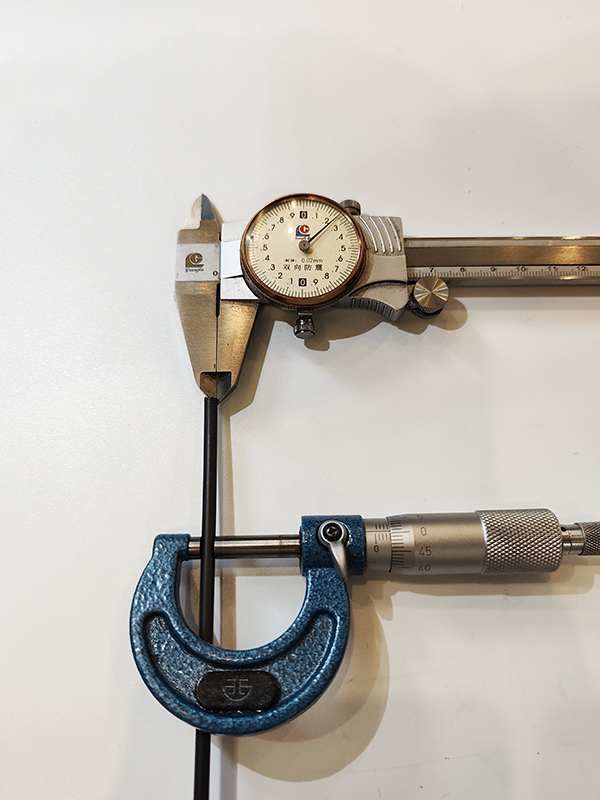
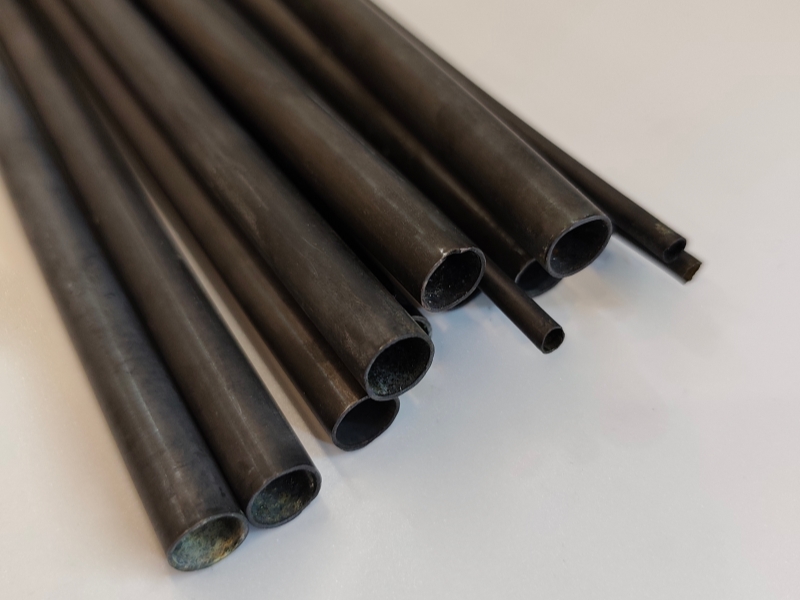
Nickel titanium alloy capillary tube with outer diameter of 4.01 and wall thickness of 0.24mm
1、 Core customization dimension
(1)Customization of alloy composition and function (most crucial)
Superelastic: Ni Ti ≈ 55.5-56.5wt%, capable of large deformation and rebound at room temperature, used for catheters, stents, and endoscopes.
Shape Memory: Ni Ti ≈ 50.5-51.5wt%, low-temperature deformation, temperature recovery, used for temperature control driving and interventional instruments.
Interventional medical grade: low nickel precipitation, high biocompatibility, in compliance with ASTM F2063, ISO 13485, GB 24627.
Industrial grade: focuses on strength, corrosion resistance, and cost, used for sensors, microfluidics, and precision springs.
(2)Customization of dimensional accuracy
Outer diameter (OD): 0.1mm – 6.0mm (minimum up to 0.08mm).
Inner diameter (ID): 0.05mm -5.0mm (minimum 0.03mm).
Wall thickness (WT): 0.05mm – 2.0mm (starting from 0.03mm for ultra-thin walls).
Length: 3mm -6000mm, can be customized/coiled (≥ 100m).
Tolerance: Outer diameter ± 0.002mm, wall thickness ± 0.001mm, coaxiality ≤ 0.005mm.
(3)Customization of processing and post-processing
Forming process: seamless cold rolling/drawing (no welds, high strength), welded pipe (large diameter/low cost).
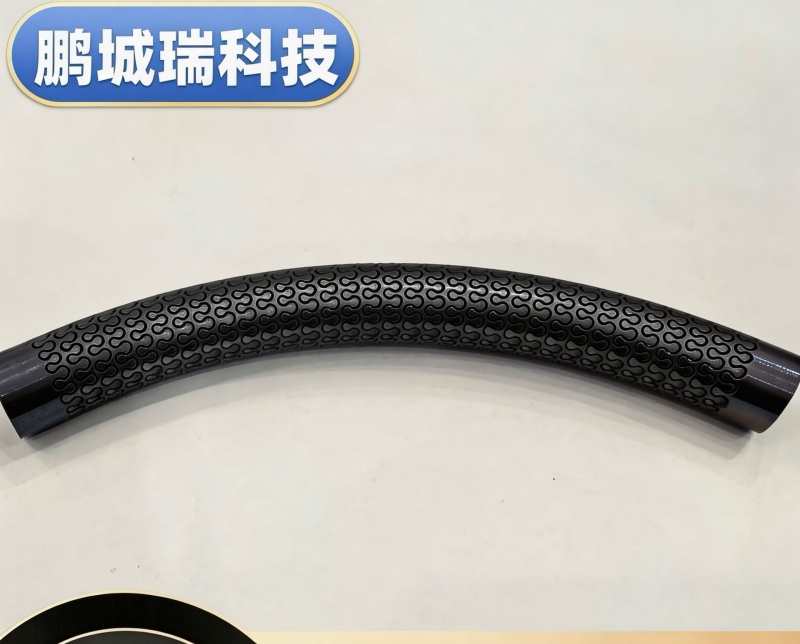
Precision machining: cutting, grinding, expanding, shrinking, slotting, punching, 3D bending (R ≥ 1.5D).
Heat treatment: vacuum annealing, aging, shaping (controlling phase transition temperature Af/As/Mf/Ms).
Surface Treatment
Electrolytic polishing/mechanical polishing of inner/outer walls (Ra ≤ 0.1 μ m).
Passivation, oxidation, medical grade coating (reducing nickel precipitation, anticoagulant).
Remove stress, oil stains, and clean packaging (Class 1000).
(4)Customization of performance parameters
Phase transition temperature (Af): -20 ℃ to+100 ℃ (precisely controlled according to the usage environment).
Super elastic platform stress: 300-800MPa (matched as needed).
Fatigue life: ≥ 10 cycles (medical intervention level).
Corrosion resistance: resistant to body fluids, seawater, acid and alkali, without pitting corrosion.
2、 Typical customized specifications and application scenarios
(1) Interventional medical (stent/catheter): Specification 0.3-1.2mm × 0.05-0.2mm, core customization point, super elasticity, medical cleanliness, low nickel precipitation, three-dimensional bending tube
(2) Orthodontics: Specification 0.4-0.8mm × 0.1-0.2mm, core customization point, shape memory, Af ≈ 37 ℃, high toughness
(3) Microfluidic/Sensor: Specification 0.1-0.5mm × 0.05-0.15mm, core customization point, ultra-high precision, smooth inner wall, no leakage
(4) Aviation/Precision Machinery: Specification 0.5-3.0mm × 0.1-0.5mm, core customization point, high strength, fatigue resistance, complex molding
3、 Customized process (from requirement to delivery)
(1)Requirement confirmation: Provide drawings/samples, specifying dimensions, functions, standards, quantities, surface/heat treatment requirements.
(2)Proposal quotation: material selection, process route, tolerance, testing items, delivery time, MOQ (usually starting from 3-5 meters).
(3)Sample production: 1-3 samples for performance/size/assembly verification.
(4)Batch production: vacuum melting → bar material → drawing → precision machining → heat treatment → surface treatment → full inspection.
(5)Testing and delivery: Provide size reports, mechanical/phase change tests, cleanliness reports, and material certification.
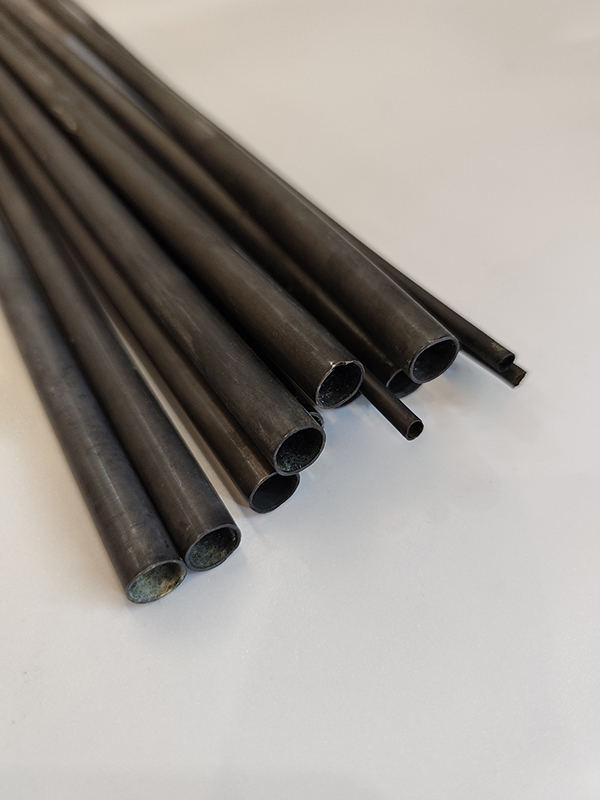
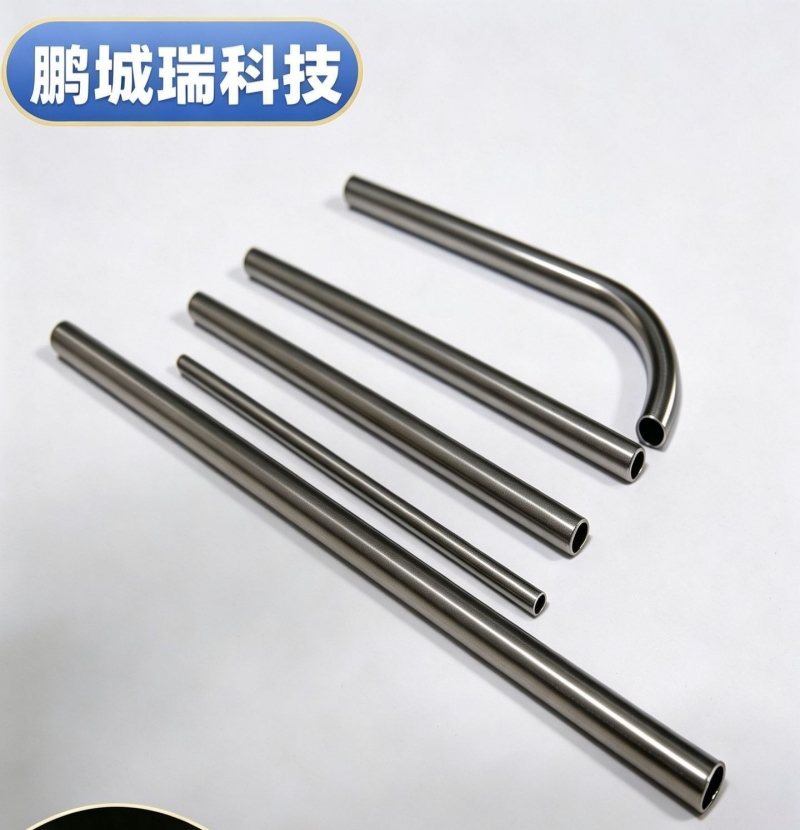
Nickel titanium alloy capillary tubes with multiple size specifications
4、 Key indicators for selecting custom manufacturers
Qualifications: Medical grade requires ISO 13485, ASTM F2063, and CE certification.
Equipment: precision drawing machine, CNC bending pipe, vacuum heat treatment, electrolytic polishing, optical inspection.
Accuracy capability: minimum outer diameter/wall thickness, tolerance control, surface roughness.
Cleanliness: Medical grade requires dust-free workshop, deionized water cleaning, and vacuum packaging.
Experience: Customized medical/aviation/precision instrument cases, phase change temperature control capability.
5、 Common customization problems and solutions
Ultra thin walls are prone to deformation: Multiple cold drawing and vacuum annealing processes are used to control residual stress and improve roundness and strength.
Difficulty in inner diameter polishing: Specialized inner hole electrolytic/fluid polishing ensures smooth and burr free inner walls.
Excessive nickel precipitation: Low nickel formula+surface passivation/coating is selected to meet medical safety standards.
Complex 3D bend pipe: CNC bend pipe+shaping heat treatment, ensuring controllable rebound and precise angle.
6、 Customized Deliverables List
Nickel titanium alloy capillary tube (according to drawings/specifications).
Material certification (composition, Ni/Ti ratio).
Dimensional inspection report (OD/ID/WT/length/coaxiality).
Phase transition temperature test report (Af/As/Mf/Ms).
Mechanical performance report (tensile/yield/elastic/fatigue).
Surface quality report (roughness, cleanliness).
Medical grade: biocompatibility and nickel precipitation test report.
Nitinol
Seamless nickel titanium tube Nickel titanium fiber wire Nickel titanium plateApplication Area
Medical Industry New Energy Aerospace Machinery Manufacturing Marine Engineering Petrochemical IndustryContact Us
Contacts:Manager Wu +86 13632667260


 WeChat
 Call me
X