
 Chinese
 English

Service Hotline
+86 18948275773+86 13632667260

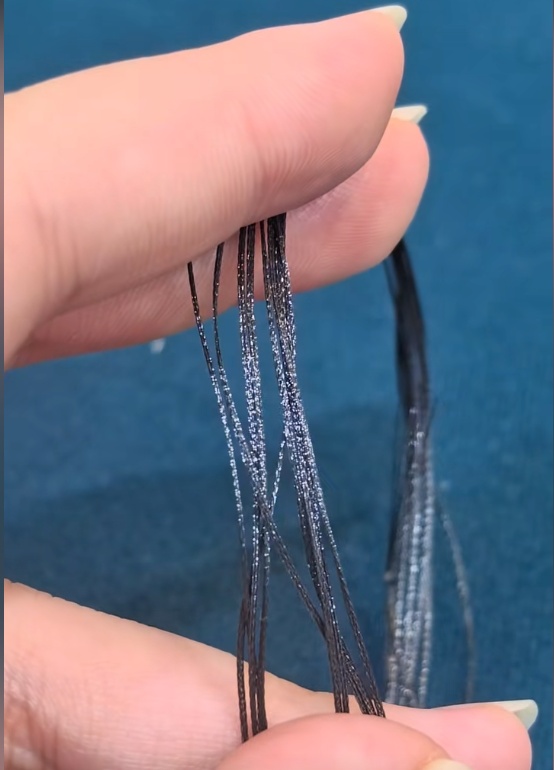
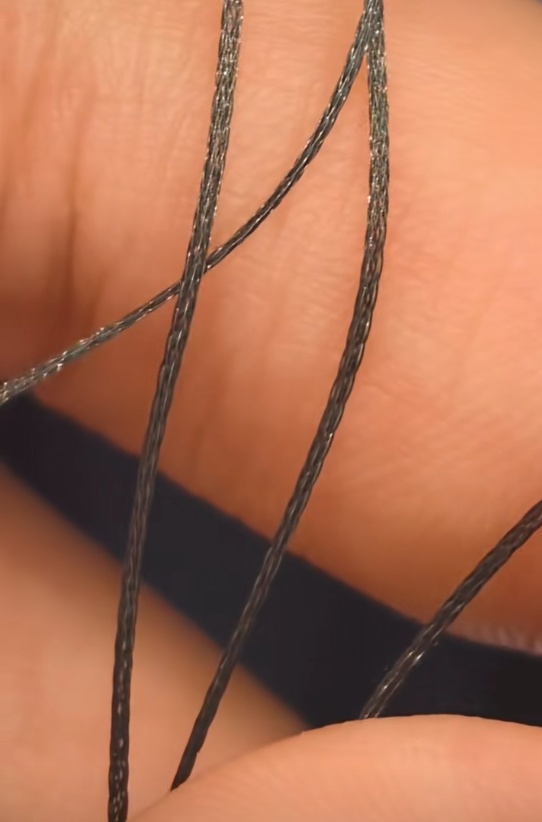
Nickel titanium alloy braided rope is a multi strand rope like material made by twisting or weaving fine wires of nickel titanium shape memory alloy (NiTi, commonly known as Nitinol) according to a certain configuration. It is essentially a "deformable metal" that combines the superelasticity, shape memory, and high damping properties of memory alloys with the flexibility brought by the multi strand structure of steel wire ropes.
Material Composition
-Composition: Ni 54.5% -57.0% (mass fraction), residual Ti, belonging to the intermetallic compound TiNi with nearly equal atomic ratio; Impurity C ≤ 0.040%.
-Silk and rope materials: First, they are drawn into fine wires of 0.02-1.0 mm grade, and then twisted/woven into ropes in configurations such as 1 × 7, 1 × 19, 7 × 7, and 7 × 19. The finished rope diameter is commonly 0.2-5.0 mm.
-Standard system: There are ASTM F2063 and GB/T 24627 for medical use, and YY/T 1924-2025 "Surgical Implant Nickel Titanium Shape Memory Alloy Rope Material" is a specialized standard in China, which is specifically used for orthopedic thread guides, cables, grippers, grasping rings, mesh baskets, guide ropes, etc.
-The state is divided into hyperelastic state (SE) and shape memory state (SM), and the phase transition temperature Af is adjusted to between -50 ℃ and+110 ℃ through heat treatment to adapt to different scenarios.
Core Features
1. Super elasticity (phase transition pseudo elasticity) - the most prominent one
The recoverable strain can reach 8% -10%, and ordinary metals generally undergo permanent plastic deformation at 1%. When subjected to stress, austenite stress induces transformation into martensite, which automatically reverses phase transformation back to its original shape after unloading. Steel wire ropes without "memory" cannot do this. The elastic modulus also varies with the phase state, with austenite at about 70-80 GPa and martensite at only 20-40 GPa.
2. Shape memory effect
Under low-temperature martensitic state, it can undergo plastic deformation freely. After heating beyond Af, it automatically returns to the preset shape and outputs a considerable restoring force. It can be used as a temperature controlled driving element.
3. High damping and strong energy consumption
The hysteresis loop area of phase change is large, and its energy dissipation capacity is significantly better than that of steel wire ropes of the same specification. Research has shown that the equivalent damping ratio of nickel titanium steel wire rope isolators is significantly higher than that of steel wire ropes, and there is a "pinch" effect near the equilibrium position, with lower initial stiffness - this is its core value for seismic isolation and vibration resistance.
4. Anti bending, non knotting, and continuous threading
Multi strand structures are much more flexible than single strands of the same diameter, with a smaller bending radius. They can be wound tightly around pulleys or blood vessels and bent repeatedly millions of times without permanent twisting or loose strands.
5. Mechanical indicators (hyperelastic rope material)
Tensile strength ≥ 1000 MPa (single filament is usually between 800-1500 MPa), elongation ≥ 10%, upper platform stress ≥ 350 MPa, residual strain ≤ 0.5%.
6. Corrosion resistance+biocompatibility
Surface TiO ₂ passivation film, resistant to salt water, body fluids, and chemical media, meets the implantation requirements of ISO 10993/ASTM F2063.
7. 1:1 torque and push-pull transmission
The reason why it is widely used in catheters and endoscopic instruments is that it transmits rotation and push-pull almost without hysteresis in winding paths.
Limitations to be aware of as well
-Temperature sensitivity: Performance drifts with environmental temperature, especially near Af; High frequency cyclic loading can lead to an increase in stiffness and a decrease in energy consumption due to self heating caused by latent heat of phase change.
-The phase transition platform of the twisted rope will be weakened: the stress of each wire inside the 7 × 19 stranded wire is uneven, the hysteresis curve has no obvious phase transition platform, and the recovery rate and damping ratio degrade significantly after cycling. Pre training and 400 ℃/10min annealing are needed to stabilize it.
-High nickel content: There is a concern of nickel precipitation during long-term implantation, which needs to be controlled by surface passivation/polishing.
-High cost and difficult processing: narrow melting, drawing, and twisting windows, poor welding and machining performance, and much higher prices than stainless steel ropes.
Typical use
-Medical equipment: orthopedic threading device, lasso, stone retrieval basket, grabber, guide wire, scaffold woven skeleton
-Civil/structural: SMA stranded wire self resetting nodes, dampers, vibration isolation bearings (bridges, building seismic isolation)
-Industrial/consumer: aviation vibration reduction, precision instrument vibration isolation, deep sea cables, fishing gear front wires, eyeglass frames, elastic structural components
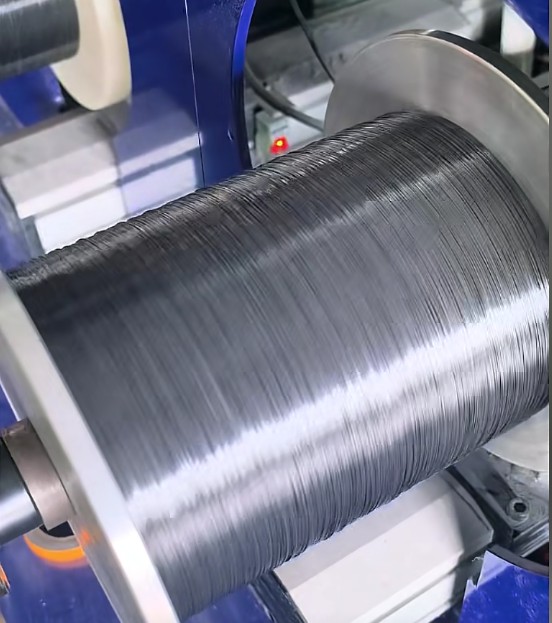
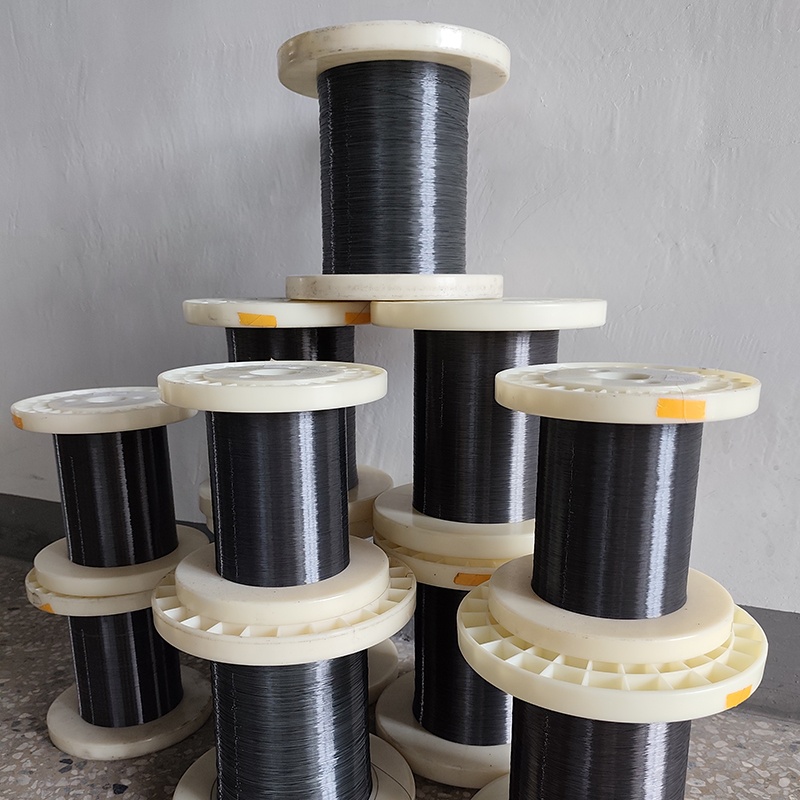
Huizhou Pengchengrui Technology Co., Ltd. is the original manufacturer of nickel titanium alloy materials, starting from smelting, forging, rolling, and drawing, and independently completing the entire industry chain. The composition, phase transition temperature, and microstructure properties are strictly controlled in every process, with stable batches and controllable delivery times, allowing downstream equipment factories to use truly high-quality domestic materials.
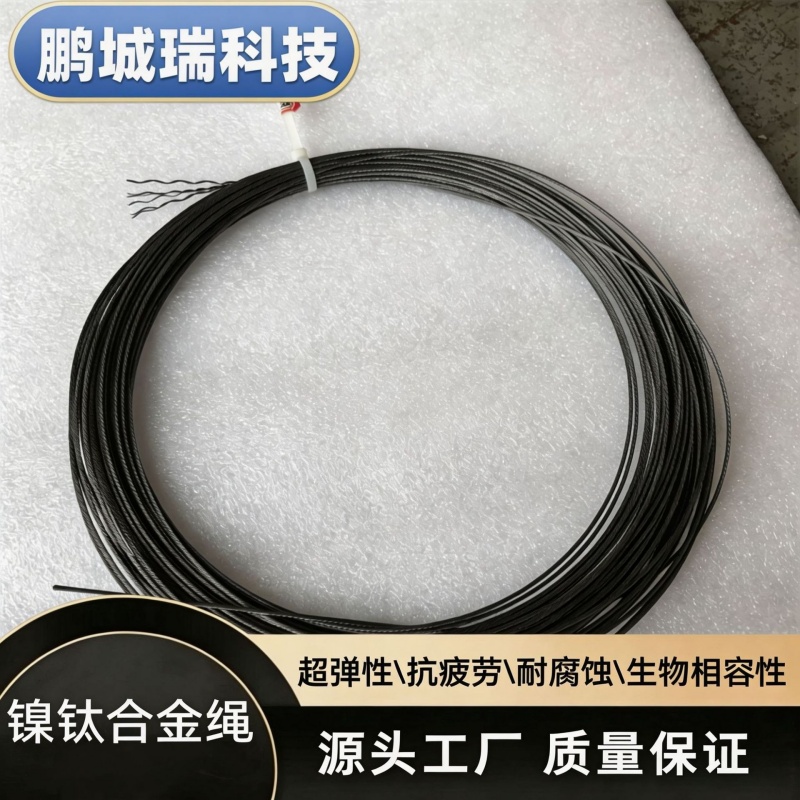
The nickel titanium alloy braided rope is made of multiple strands of ultra elastic nickel titanium fine wires twisted together: soft and easy to bend, leaving no dead folds, precise torque transmission, high tensile strength, and fatigue resistance. From a few millimeters fine to several millimeters thick, structures such as 1 × 7, 7 × 7, and 1 × 19 can be customized as needed, suitable for scenarios such as wire guides, stone retrieval baskets, endoscopic instruments, and orthopedic implants.

Nitinol
Seamless nickel titanium tube Nickel titanium fiber wire Nickel titanium plateApplication Area
Medical Industry New Energy Aerospace Machinery Manufacturing Marine Engineering Petrochemical IndustryContact Us
Contacts:Manager Wu +86 13632667260


 WeChat
 Call me
X