
 Chinese
 English

Service Hotline
+86 18948275773+86 13632667260

Nickel titanium braided rope: with super elasticity/shape memory, automatically rebounds when bent and released, featuring flexibility, repeated deformation, and medical precision scenes; Stainless steel wire rope: ordinary elasticity, permanent creases will be left when bent hard, focusing on stable tensile strength, load-bearing, anti-corrosion, and high cost-effectiveness
1. Material principle
-Nitinol: Nickel+titanium alloy, shape memory alloy, room temperature hyperelastic state, adjustable phase transition temperature, belongs to "smart metal"
-Stainless steel wire rope: 304/316 austenitic stainless steel (iron chromium nickel), ordinary metal, no memory effect, flexible obtained by twisting structure
2. Elasticity and deformation (maximum difference)
-Nickel titanium rope: extremely high elastic strain (up to~8%), after significant bending and twisting, it can fully recover when the external force is removed, making it less prone to dead bending and twisting; It can also be used for temperature control memory: heating restores the preset shape
-Stainless steel wire rope: It has very low elasticity, and if it exceeds the elastic limit, it will permanently bend or start dead bending, and cannot automatically recover; Flexibility comes from the twisting of multiple strands, not the superelasticity of the material itself
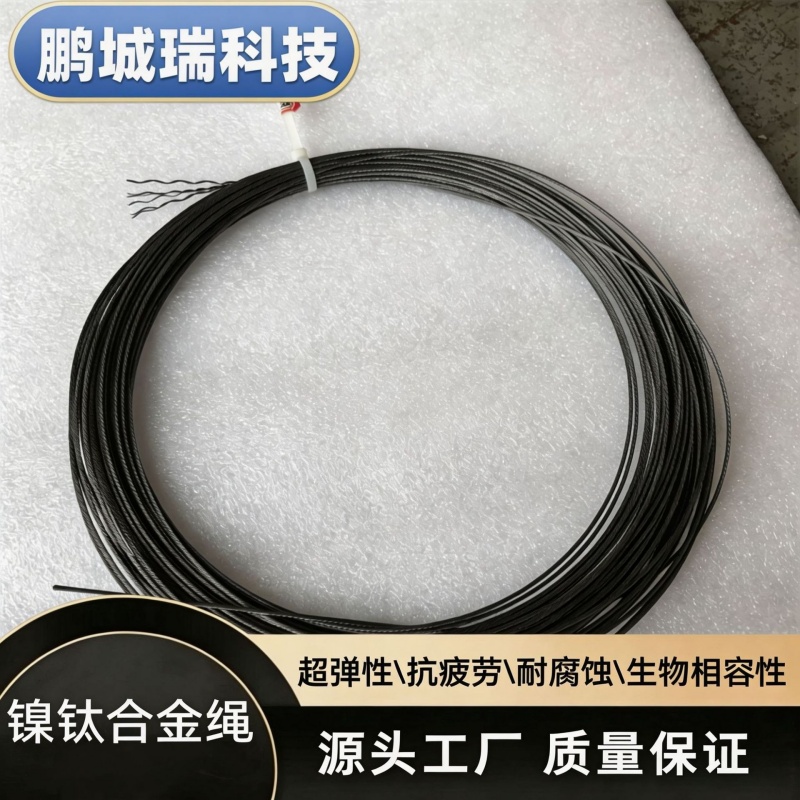
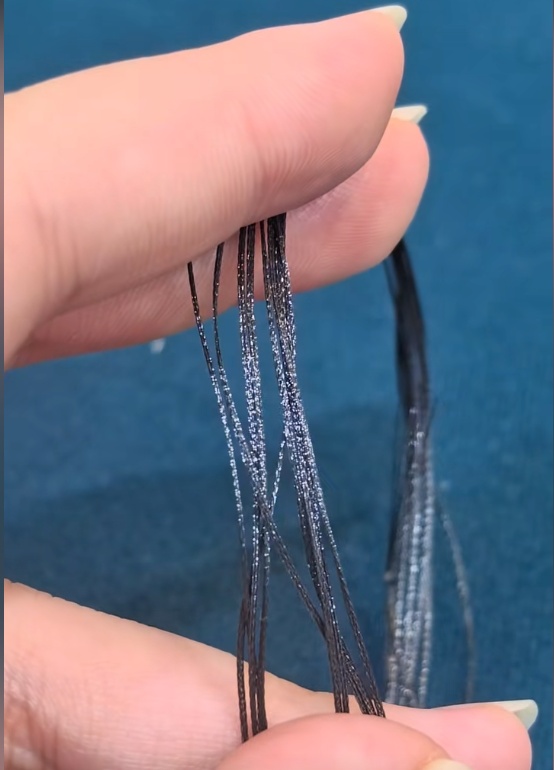
Nickel titanium alloy braided rope
3. Corrosion resistance and biocompatibility
-Nickel titanium rope: resistant to body fluid corrosion, good biocompatibility, and meets medical implant standards; Good resistance to chloride ions, but not as stable as 316 stainless steel in long-term seawater conditions
-Stainless steel rope (316): seawater, salt spray, outdoor anti-corrosion mature; 304 is suitable for ordinary humid environments; Medical implants are generally not preferred, as some people are allergic to nickel
4. Strength, fatigue, and tactile sensation
-Nickel titanium: good tensile strength, extremely strong dynamic fatigue, and not easily broken after millions of repeated bending; Smooth to the touch, suitable for pushing, pulling, and transmitting torque (catheter, endoscope cable); Slightly lighter density than stainless steel
-Stainless steel: The same diameter usually has a higher breaking force and strong static load-bearing capacity; Repeatedly bending until a certain number of times will result in broken wires and loose strands; Higher rigidity, suitable for lifting, guardrails, and towing
5. Price, processing, and magnetism
-Nickel titanium rope: very expensive, difficult to process, and mostly comes in ultra-fine precision rope specifications; Can be non-magnetic; Special cutting and crimping processes
-Stainless steel wire rope: cheap, mature in mass production, with specifications ranging from fine decorative ropes to large tonnage lifting ropes; 304/316 weak/non-magnetic, easy to press and fix with aluminum sleeve
6. Typical Applications
-Nickel titanium braided rope: minimally invasive intervention (stone retrieval basket, guide wire core rope), orthopedic fixed cable, endoscopic manipulation cable, robot flexible drive, aerospace deployable structure, intelligent drive component
-Stainless steel wire rope: sling, guardrail cable, marine rigging, decorative suspension line, fishing gear, fitness equipment cable, ordinary mechanical transmission cable
-Need to bend repeatedly, cannot bend rigidly, needs to rebound, enters the human body: nickel titanium alloy braided rope
-Mainly used for load-bearing, outdoor seawater, limited budget, static tensioning: 316 stainless steel wire rope
-Ordinary indoor suspension and decoration: 304 stainless steel wire rope
Pengchengrui Technology, Huizhou City | Nickel Titanium Alloy Source Factory
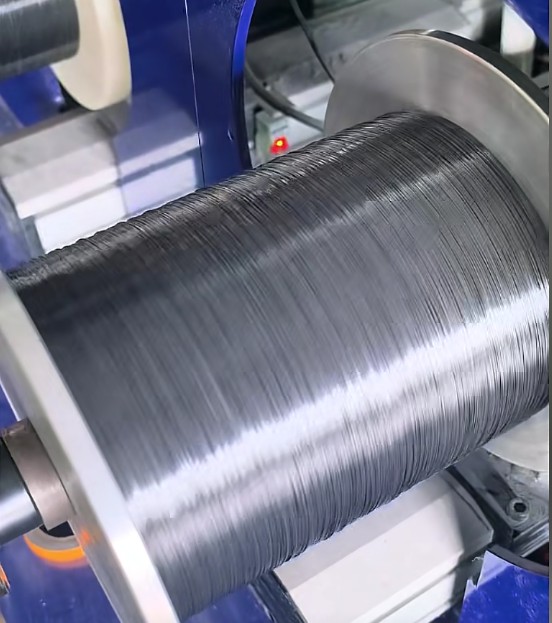
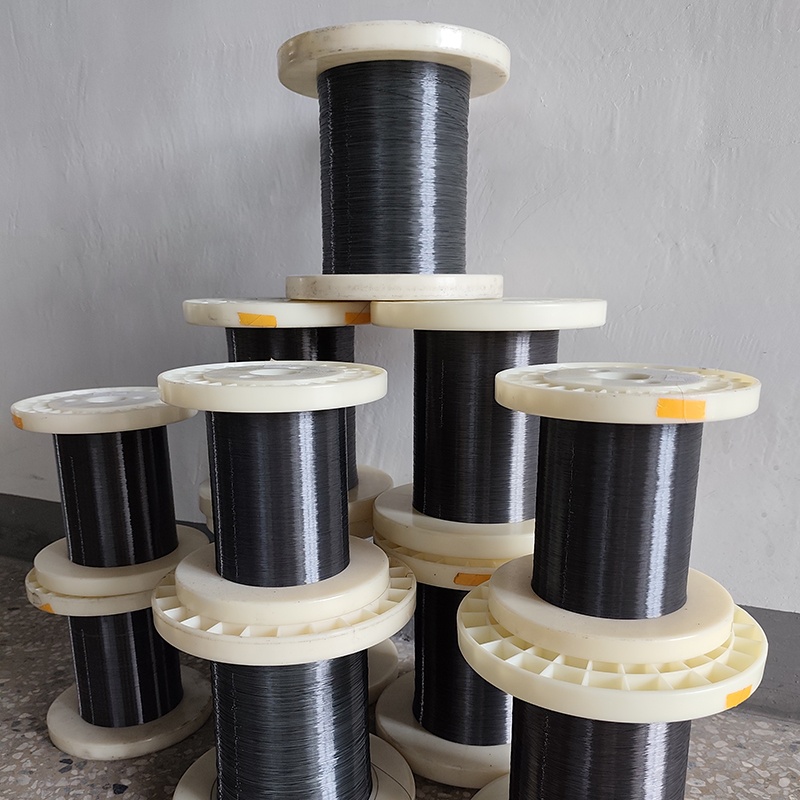
We produce the entire process of vacuum melting, rolling, drawing, and weaving, specializing in the supply of * * nickel titanium alloy braided ropes * *, which are super elastic, bending resistant, and can be customized for phase transition temperature. We also offer customized medical/industrial precision memory alloy materials.

Nitinol
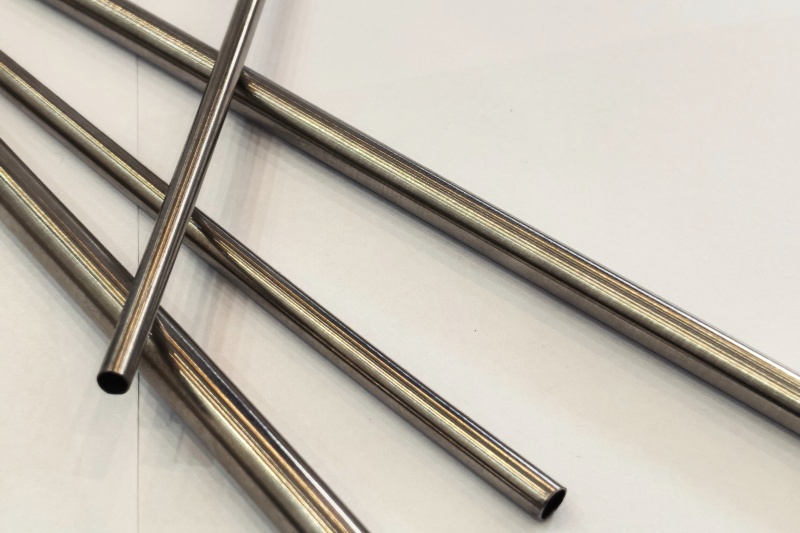
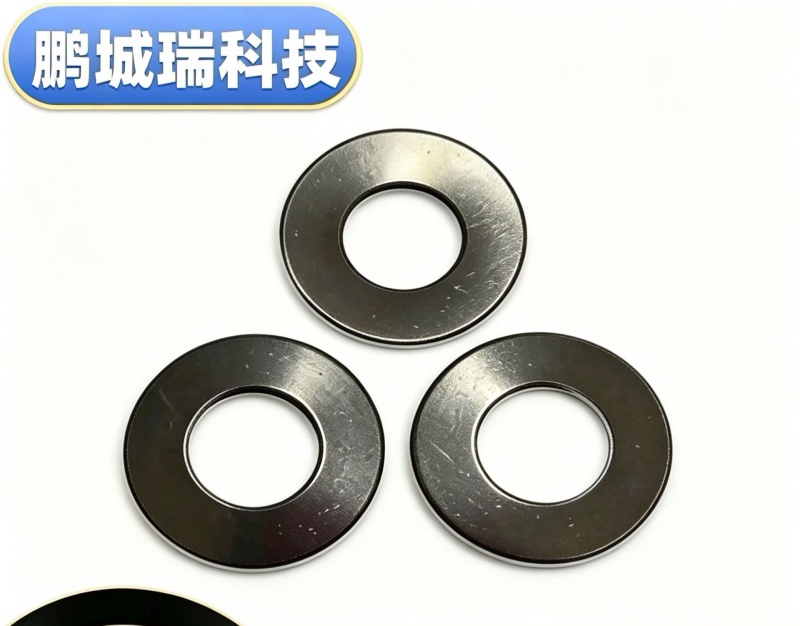
Seamless nickel titanium tube Nickel titanium fiber wire Nickel titanium plateApplication Area
Medical Industry New Energy Aerospace Machinery Manufacturing Marine Engineering Petrochemical IndustryContact Us
Contacts:Manager Wu +86 13632667260


 WeChat
 Call me
X