
 Chinese
 English
Service Hotline
+86 18948275773+86 13632667260



Thin walled seamless nickel titanium (NiTi) alloy tube is a precision seamless tube made of near equiatomic ratio nickel titanium shape memory alloy as the base material, formed without welds, and with extremely small wall thickness. It is a core special metal material in the high-end minimally invasive medical and precision sensing fields. Unlike welded nickel titanium tubes, there is no hidden danger of weld stress concentration, leakage, or fracture. The ultra-thin wall thickness retains both superelasticity and memory effect, and the processing threshold is extremely high.
1、 Basic components and execution standards
1. Chemical composition
Medical grade nickel mass fraction: 54.5% to 57.0%, with residual titanium; Strictly control impurity elements such as C, O, H, Fe, Cu, etc., with a total amount of non-metallic inclusions ≤ 0.5%, to ensure implant safety.
2. Authoritative standards
-National standards: GB/T 24627-2023 (for implants), YS/T 1136-2016 (for medical seamless nickel titanium tubes)
-International: ASTM F2063, ASTM F2633 (Global Medical Device General Access Standard)
2、 Conventional size specifications (thin-walled definition)
Industry wide thin-wall classification: Wall thickness ≤ 0.3mm, ultimate ultra-thin wall ≤ 0.05mm
1. Outer diameter range: 0.2-15mm (commonly 0.3-8mm for interventional procedures)
2. Wall thickness range: conventional 0.05-0.3mm; extreme ultra-thin 0.025-0.05mm
3. Accuracy tolerance: Outer diameter ± 0.01mm, wall thickness tolerance up to ± 0.005mm, precise control of coaxiality and straightness
4. Surface roughness: outer surface Ra ≤ 0.4 μ m, inner hole Ra ≤ 0.6 μ m, no burrs or scratches after electrolytic polishing
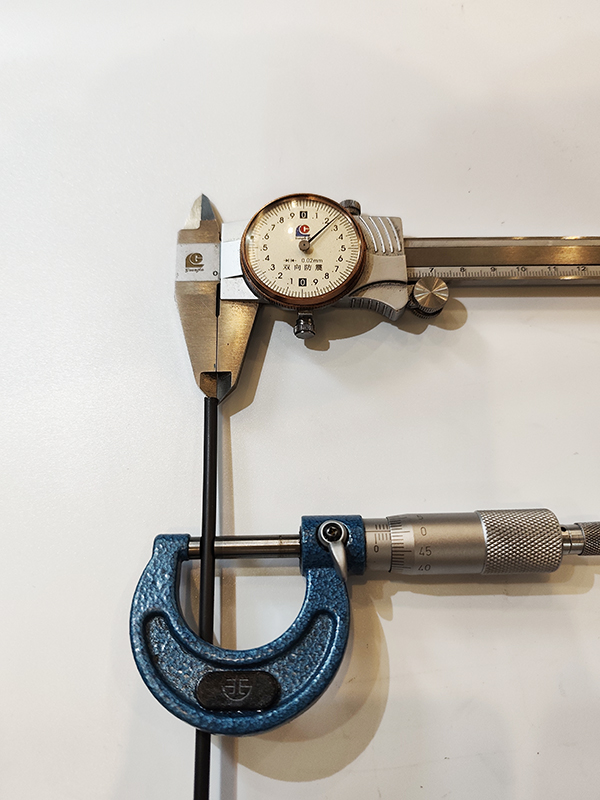
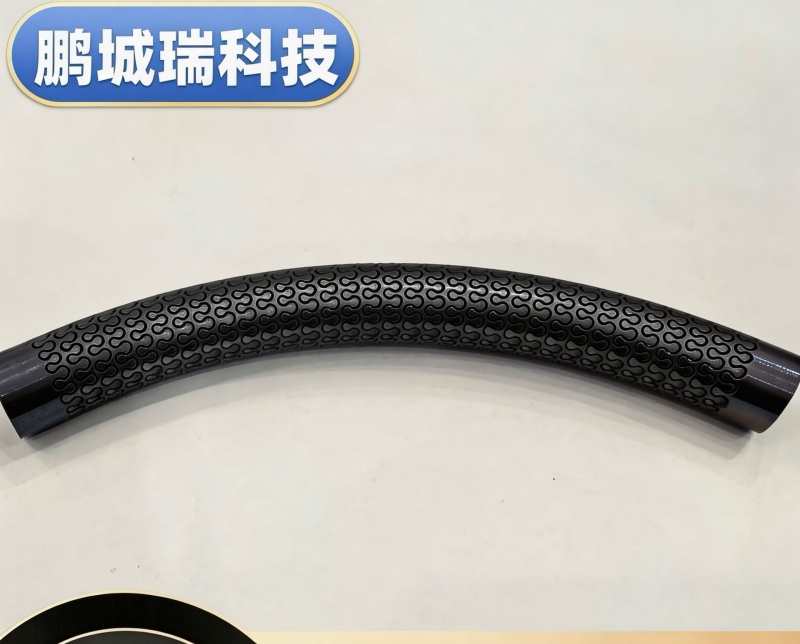
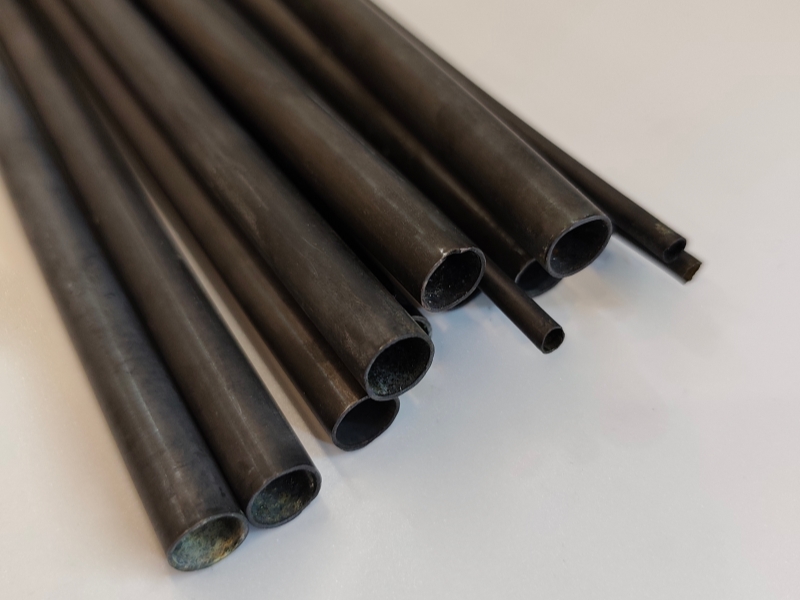
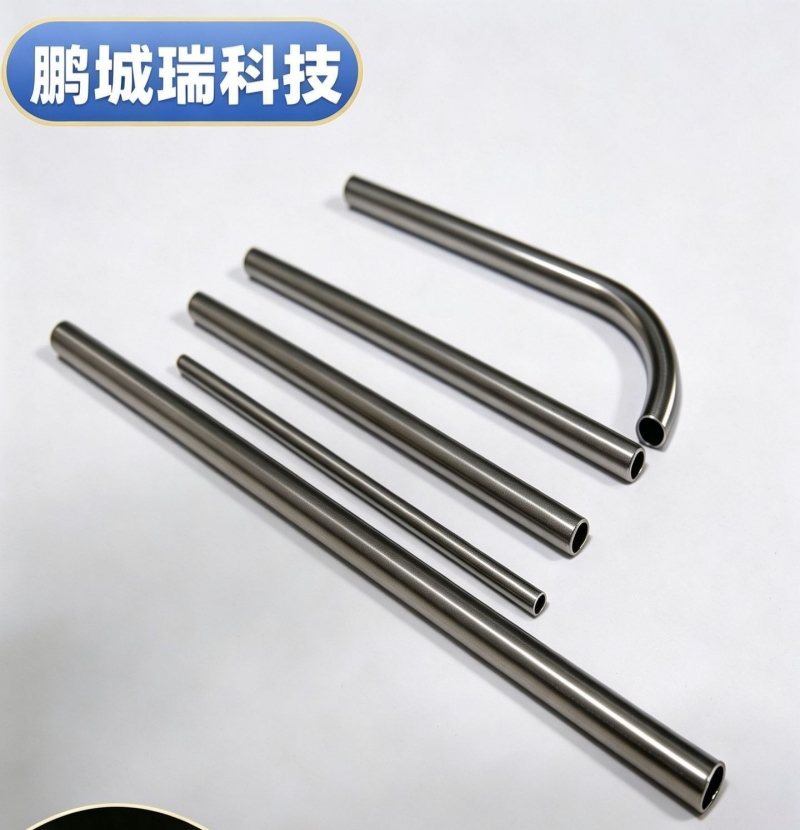
Thin walled seamless nickel titanium alloy tube
3、 Core material performance (unique advantage of seamless thin-walled)
1. Super elasticity (core characteristic at room temperature)
Can withstand large angle repeated bending (with a minimum bending radius of only 2-3mm), automatically rebounds and recovers after bending, with minimal permanent deformation; The 0.1mm thick thin tube can be bent 360 ° without collapsing or cracking, suitable for curved and tortuous blood vessel channels in the human body.
2. Shape memory effect
Low temperature shaping compression, automatic restoration of preset diameter when implanted into the human body (at 37 ℃ body temperature), the core feature of stent implants.
3. Excellent biocompatibility
Resistant to body fluid corrosion, with extremely low nickel ion precipitation, no immune rejection, and can be permanently implanted in the body for a long time; No welds, the fatigue cycle life inside the body far exceeds that of welded pipes.
4. Mechanics and fatigue performance
The radial support force is controllable (0.3-0.8N/mm), and the thin-walled lightweight design ensures the support strength; Over a hundred million cycles of reciprocating bending fatigue without fracture, suitable for long-term dynamic working conditions in the body.
5. Other characteristics
Low density, lightweight, non-magnetic, compatible with magnetic resonance imaging (MRI) examination, no need for secondary surgery to remove after implantation.
4、 Complete production process flow (seamless molding)
Nickel titanium alloy has extremely strong cold work hardening and is prone to cracking. Thin walled seamless pipes require multiple passes of warm rolling and vacuum annealing for collaborative processing
1. Vacuum consumable arc melting ingot → forging and opening → hot extrusion of coarse tube billet
2. Multi pass warm rolling (500-700 ℃) for reducing diameter and wall thickness, followed by vacuum stress relief annealing under argon protection
3. Precise cold drawing of the floating core head, gradually reducing the thickness to the target ultra-thin wall thickness
4. Inner hole honing+outer circle electrolytic polishing, cutting to length, straightening, and clean cleaning
5. Packaging and phase change temperature (Af) calibration testing for medical grade 100000 cleanroom
>Key difficulties: Ultra thin wall thickness drawing is prone to eccentricity, internal hole strain, uneven wall thickness, and the ultimate ultra-thin wall yield rate is less than 30%. The localization difficulty of high-end medical tubing is high.
5、 Segmented application areas
(1) Medical implantation (the most mainstream, accounting for over 90% of usage)
1. Blank vascular stent tube
The original tubing for coronary, peripheral vascular, and nerve intervention stents has a wall thickness of 0.08-0.12mm. The laser engraved mesh stent has a small delivery outer diameter, making it easy to pass through narrow blood vessels.
2. Minimally invasive interventional catheter/sheath
Micro tubes, guide tubes, and internal support tubes for thrombectomy, with ultra-fine thin walls that combine flexibility and push rigidity.
3. Orthopedic, urological, and digestive instruments
Ureteral stent, biliary stent, orthopedic minimally invasive nail sheath, and orthodontic internal components.
4. Surgical instruments
Endoscopic flexible operating sheath, minimally invasive surgical flexible operating rod.
(2) High end industrial sector
1. Aerospace: intelligent actuators, sensing capillary tubes, low-temperature fluid delivery tubes;
2. Precision instruments: Micro electromechanical MEMS sensing tubes, corrosion-resistant chemical medium fine pipelines;
3. Marine oil and gas: Flexible measurement and control pipelines resistant to seawater corrosion.
6、 Key points of selection
1. For interventional instruments, seamless and electrolytic polishing are preferred, and welding pipes for permanent implantation is strictly prohibited;
2. For nerve intervention, choose ultra-thin specifications with a wall thickness of ≤ 0.1mm, and commonly use coronary stents with a wall thickness of 0.08-0.12mm;
3. It is necessary to clearly calibrate the austenite termination temperature Af (commonly used Af for human implantation=25-33 ℃) to ensure normal memory recovery at body temperature;
4. The implanted tubing must be accompanied by GB/T24627 and ASTM F2063 material quality inspection reports.
From raw material smelting to deep processing of finished products, we produce our own products throughout the entire process. Pengchengrui in Huizhou offers customized nickel titanium alloy pipes with wall thicknesses ranging from 0.08mm to 4mm. We have a complete range of specifications and can customize according to your drawings. We provide one-stop delivery with complete specifications and are available for inquiries at any time.
Nitinol
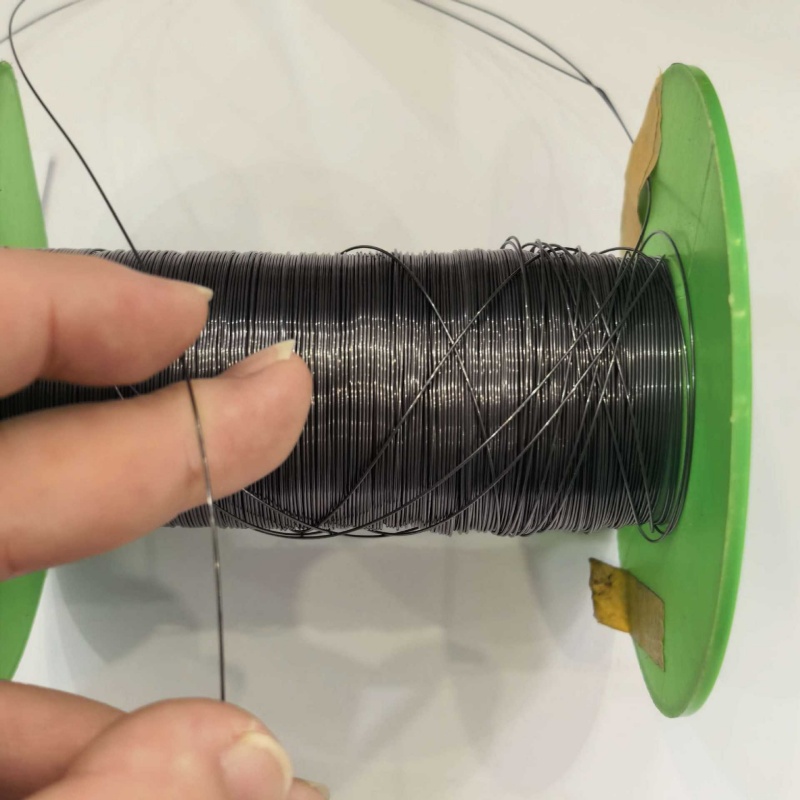
Seamless nickel titanium tube Nickel titanium fiber wire Nickel titanium plateApplication Area
Medical Industry New Energy Aerospace Machinery Manufacturing Marine Engineering Petrochemical IndustryContact Us
Contacts:Manager Wu +86 13632667260


 WeChat
 Call me
X