
 Chinese
 English
Service Hotline
+86 18948275773+86 13632667260


Nickel titanium alloy pipes can be cold-rolled, but due to their unique mechanical properties such as superelasticity, shape memory effect, and strong work hardening characteristics, the cold rolling process requires targeted optimization of process parameters to ensure processing feasibility and product quality. The following will explain the characteristics of nickel titanium alloy, feasibility of cold rolling, and key process points:
1、 The Influence of Characteristics of Nickel Titanium Alloy on Cold Rolling
The core characteristics of nickel titanium alloy (NiTi) are closely related to its martensitic transformation, which directly affects its cold rolling processing behavior:
Superelasticity: Above the austenite transformation temperature, the material can undergo significant elastic deformation (up to 8% -10%) under external forces, and can fully recover to its original state after unloading. This will result in a significant "rebound effect" during cold rolling, which may affect the dimensional accuracy of the pipe.
Work hardening: The work hardening rate of nickel titanium alloy is relatively high (much higher than that of ordinary stainless steel). During the cold rolling process, the material will quickly harden and its plasticity will decrease. If the reduction amount is too large, it is easy to cause cracking.
Plastic window: Below the martensitic transformation temperature, the material has good plasticity (elongation can reach 20% -30%), which is more suitable for cold rolling; If the temperature is too high (entering the austenite zone), superelasticity will increase the difficulty of processing.
2、 Feasibility of Cold Rolling Nickel Titanium Alloy Pipes
Despite the aforementioned characteristic challenges, cold rolling of nickel titanium alloy pipes is still a feasible processing method in industry, mainly used for:
Thinning the wall thickness of pipes (rolling from thicker hot-rolled/extruded billets to thin-walled finished products, such as medical microtubes);
Improve dimensional accuracy (control outer diameter and wall thickness tolerances);
Improve surface quality (reduce surface defects through rolling).
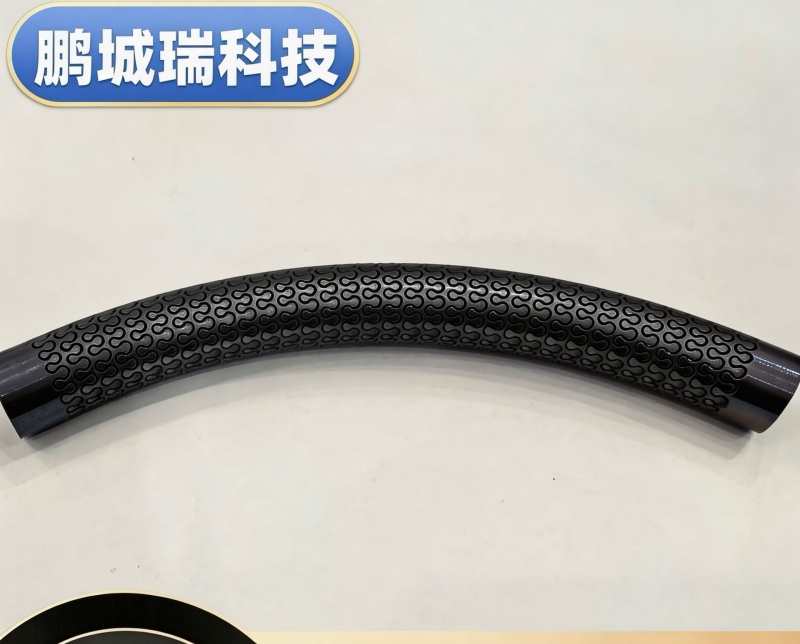
In practical applications, cold-rolled nickel titanium alloy pipes have been widely used in the medical field, such as vascular stents and guide wire sleeves, proving their feasibility.
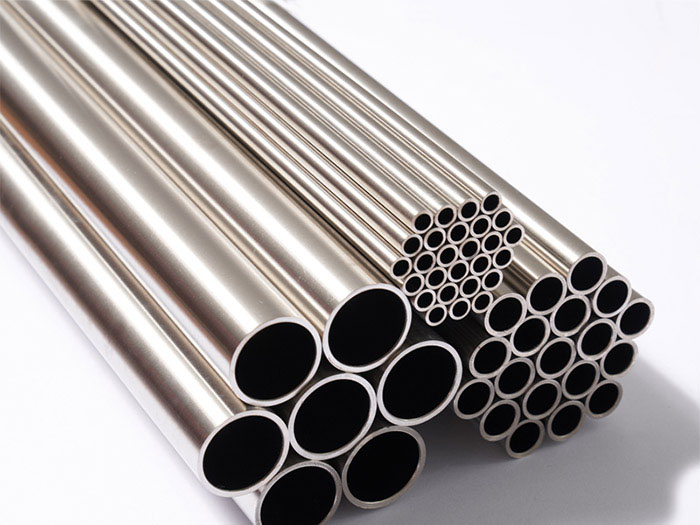
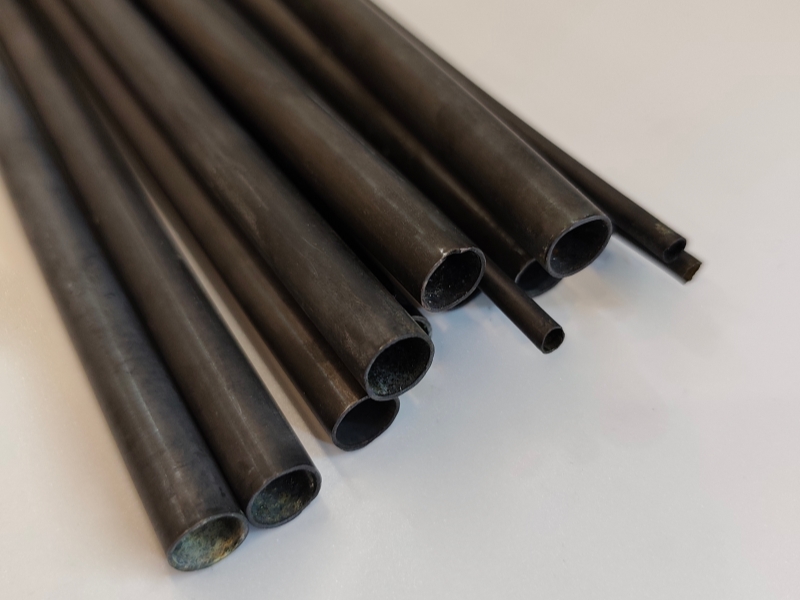
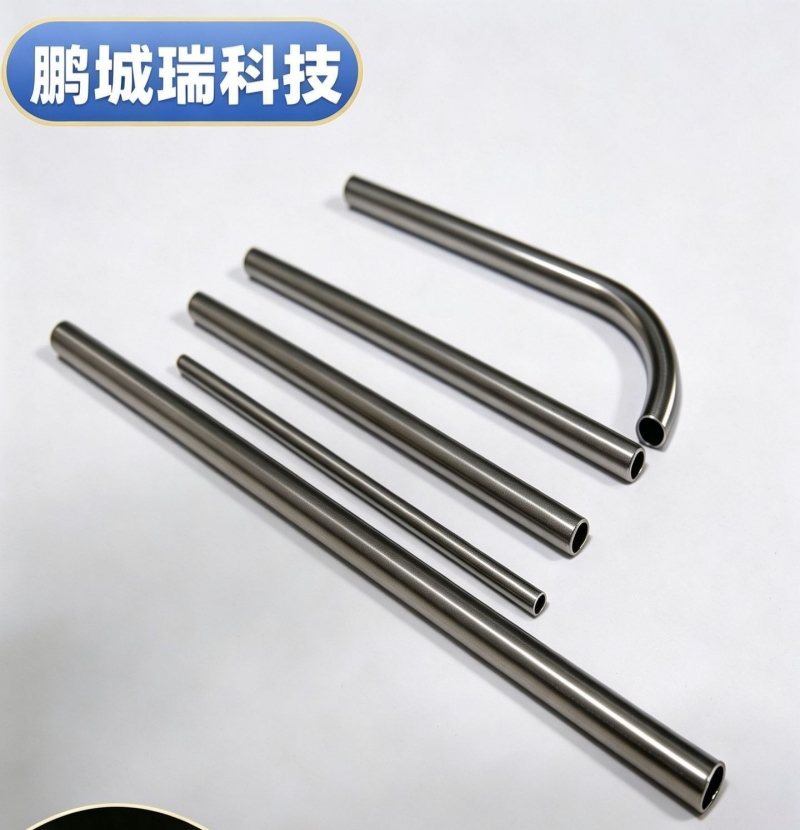
Nickel titanium alloy tube
3、 Key process points of cold rolling
To address the characteristics of nickel titanium alloys, the following parameters need to be controlled during cold rolling:
1. Rolling temperature
Usually chosen below the martensitic transformation temperature (such as room temperature or slightly lower temperature, depending on the alloy composition), the high plasticity of the martensitic phase is utilized to reduce processing difficulty; If the temperature is too high (entering the austenite zone), hyperelasticity will cause excessive rebound, which should be strictly avoided.
2. Control of compression amount
The single pressing amount should be significantly smaller than that of ordinary metals (such as a single pressing amount usually not exceeding 5% -10%), and gradually thinned through multiple passes of rolling to avoid cracking caused by too fast work hardening.
3. Intermediate annealing treatment
After 2-3 cold rolling passes, vacuum annealing (at a temperature of about 400-500 ℃ and a holding time of 12 hours) is required to:
Eliminate processing stress and restore material plasticity;
To avoid subsequent rolling cracking caused by the accumulation of work hardening.
4. Molds and equipment
High strength molds (such as hard alloys or high-speed steel) are required to ensure no wear under high rolling forces; At the same time, the rolling equipment needs to have high-precision pressure control and size feedback systems to counteract the rebound caused by hyperelasticity and ensure the dimensional accuracy of the pipe.
5. Lubrication and surface protection
Special lubricants (such as extreme pressure lubricants) are required during cold rolling to reduce friction between the mold and the pipe surface, avoid scratches or adhesions, and protect surface smoothness (especially for medical pipes, which require extremely high surface quality).
Cold rolling of nickel titanium alloy pipes is feasible, but targeted solutions are needed to address issues such as superelasticity and work hardening. By controlling the rolling temperature (martensite zone), reducing the single reduction amount, increasing intermediate annealing, optimizing the mold and lubrication processes, stable cold rolling processing can be achieved, and ultimately high-precision and high-quality pipe products can be obtained. This process has been maturely applied in fields such as medical and aviation that require strict material performance.
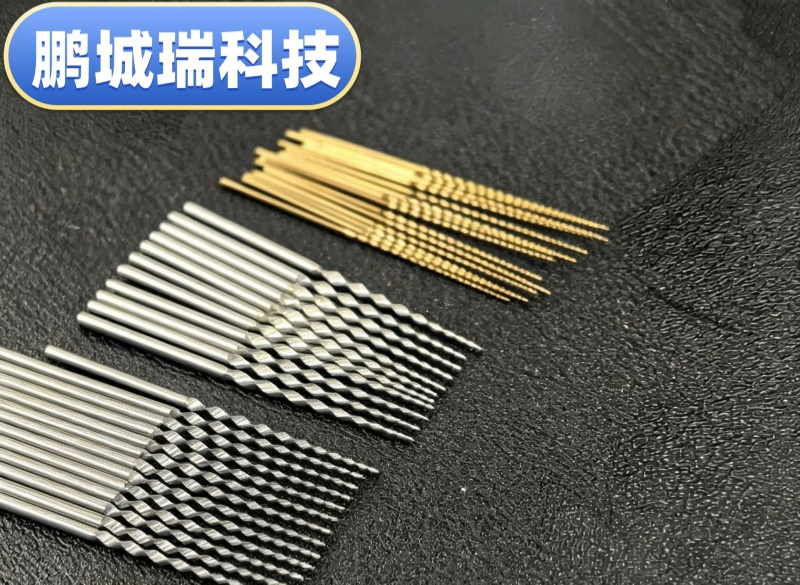
Nitinol
Seamless nickel titanium tube Nickel titanium fiber wire Nickel titanium plateApplication Area
Medical Industry New Energy Aerospace Machinery Manufacturing Marine Engineering Petrochemical IndustryContact Us
Contacts:Manager Wu +86 13632667260


 WeChat
 Call me
X