
 Chinese
 English
Service Hotline
+86 18948275773+86 13632667260



Nickel-titanium alloy ultra-thin-walled tubes are widely used in medical, aerospace, and other fields due to their excellent shape memory and superelasticity. Their preparation process involves key steps such as billet preparation, precision forming, and subsequent processing, with each step demanding strict precision control. The following provides a detailed introduction:
1. Billet preparation
1. Vacuum melting and ingot casting: Electrolytic nickel with a purity of ≥99.5% and sponge titanium with a purity of ≥99.6% are selected as raw materials, and the proportion of Ni54%-57wt% and the balance of Ti is used for batching. The raw materials are heated and melted in a vacuum environment using vacuum induction melting or vacuum consumable arc melting processes. They are also remelted 2-3 times to ensure uniform composition, and after cooling, cylindrical ingots are formed. Then, the ingots are heated to 900-1000℃ for homogenization annealing and held at temperature for several hours to eliminate internal composition segregation and stress. Finally, the oxide scale on the ingot surface is removed through mechanical processing or acid pickling.
2. Preliminary forming of tube billet: The tube billet is first machined and punched to form an extrusion billet, and then subjected to medium-temperature hydrostatic extrusion to produce a tube billet. The extrusion temperature is controlled at 650 - 700℃. With the aid of high-pressure lubrication and three-dimensional isostatic hydrostatic pressure, a tube billet with good microstructure and internal and external surface quality is obtained. Alternatively, the rod material can be processed into a tube billet through pulse piercing and wire electrical discharge machining. After processing, the tube billet is pickled in an acid pickling solution at 50 - 80℃ for 30 - 60 minutes to remove surface impurities and oxide layers.
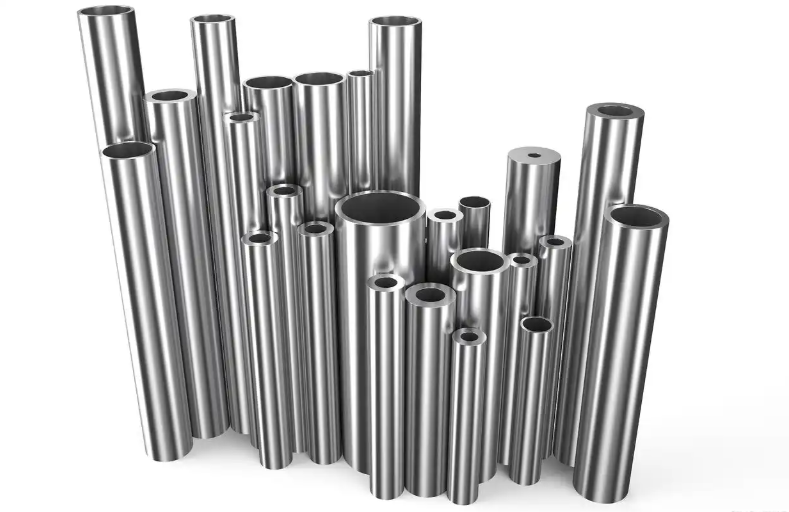
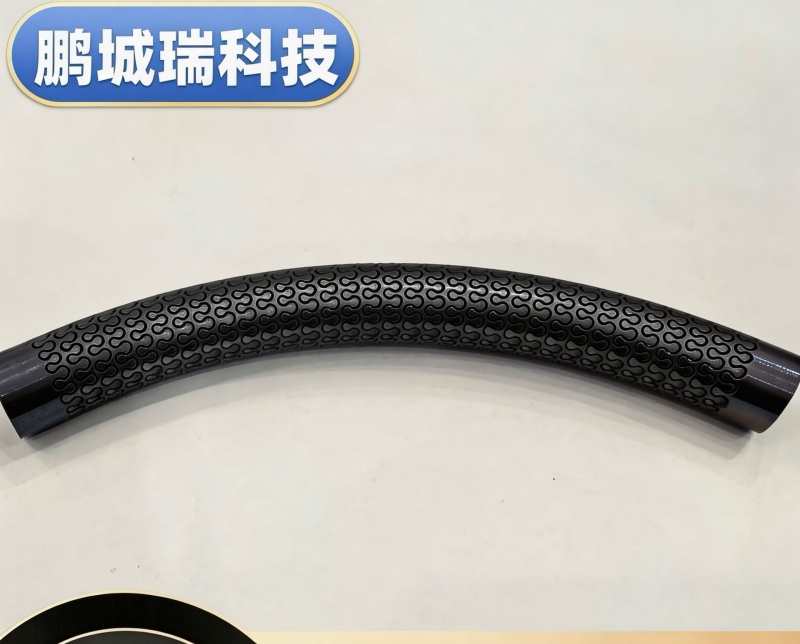
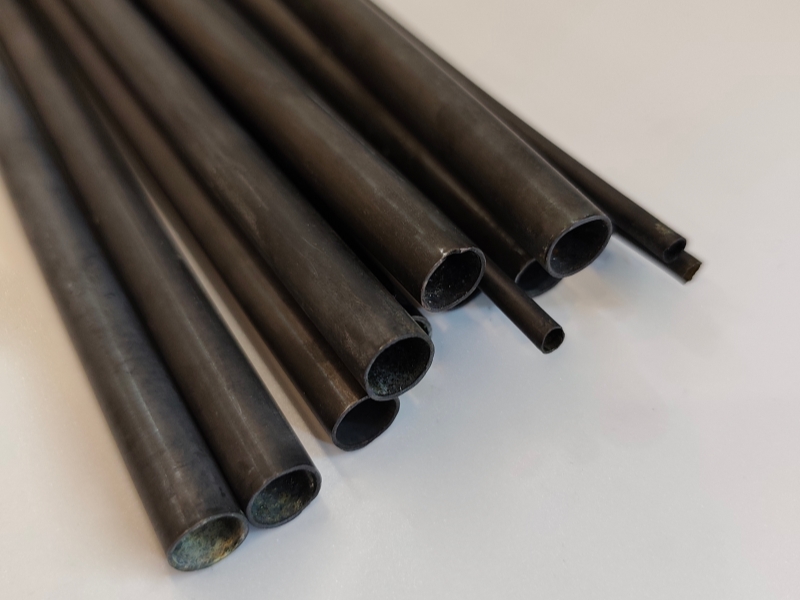
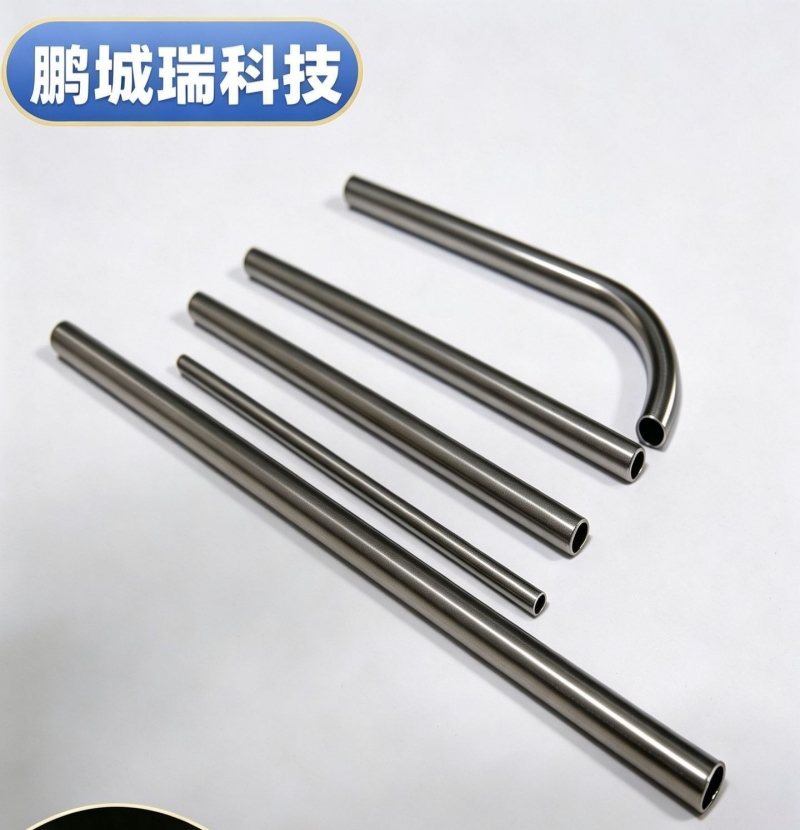
Nickel-titanium alloy ultra-thin-walled tube
II. Precision forming
This is the core step in reducing the tube billet to the target size, and the mainstream method primarily involves the drawing process.
1. Alternate drawing and reducing: An innovative process that alternates between dieless drawing and cold drawing is commonly used. First, the tube billet undergoes 2 to 10 rounds of dieless drawing at 700 - 950℃, with a drawing speed of 5 - 15mm/min, achieving a reduction ratio of 30 - 50% per pass, rapidly reducing the size of the tube billet. Then, it undergoes one round of cold drawing with a reduction ratio of less than 5% per pass, using mold constraints to improve the surface roughness and dimensional accuracy of the tube material. After that, it undergoes 1 to 2 more rounds of dieless drawing, and finally, one round of cold drawing to obtain the finished product, with an outer diameter of less than 1mm and a wall thickness of 0.02 - 1mm.
2. Auxiliary rolling process: For some tube billets, multiple rolling passes combined with intermediate annealing are used to assist in forming. During rolling, the processing rate is strictly controlled between 15 and 20, with appropriate increase in pass feed and reduction in rolling mill speed. At the same time, lubrication between the mandrel and the tube billet is strengthened to reduce the occurrence of transverse cracks. If cracks occur, the outer surface can be removed using a fine grinding wheel, while the inner surface is removed through electrolytic methods.
III. Subsequent processing
1. Heat treatment and straightening: After cold drawing, the tube material needs to undergo annealing and straightening, which is processed at a speed of 2m/min under 400 - 600℃. Solid solution treatment (holding at 800 - 1000℃ for 5 - 30 minutes followed by rapid water cooling) and aging treatment (holding at 400 - 550℃ for 0.5 - 2 hours) can also be used to regulate the phase transformation behavior of the alloy and endow it with stable shape memory function. For capillaries with a large aspect ratio, thermal tension straightening is employed to ensure straightness.
2. Surface finishing: The surface roughness of the tubing is reduced to Ra≤0.8μm through mechanical polishing, electrolytic polishing, or magnetic fluid grinding. For medical capillaries, ultrasonic cleaning is also required to remove residual impurities and ensure a clean and defect-free surface.
3. Precision cutting: If used for medical devices such as vascular stents, laser cutting machines are required for precision cutting under an argon atmosphere, combined with pulse current electrolytic polishing to remove burrs and heat-affected zones, ensuring the quality of the end face.
IV. Inspection and Warehousing
The finished product must undergo multi-dimensional performance testing. The phase transition temperature is measured using differential scanning calorimetry, and the mechanical properties and shape memory recovery rate are tested through tensile and bending tests. Corrosion resistance is tested in simulated body fluid. At the same time, the dimensional accuracy is checked. After confirming compliance with requirements, the products are classified, packaged, and stored in a dry environment to avoid corrosion.
Nitinol
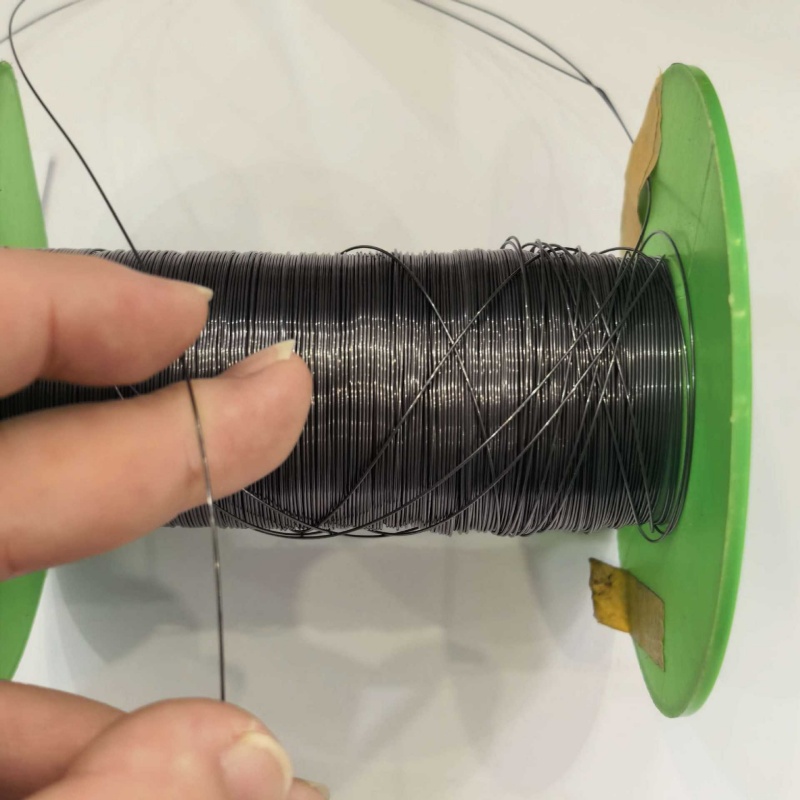
Seamless nickel titanium tube Nickel titanium fiber wire Nickel titanium plateApplication Area
Medical Industry New Energy Aerospace Machinery Manufacturing Marine Engineering Petrochemical IndustryContact Us
Contacts:Manager Wu +86 13632667260


 WeChat
 Call me
X