
 Chinese
 English
Service Hotline
+86 18948275773+86 13632667260


Standard medical grade atomic nickel titanium alloy has excellent overall biocompatibility and is the mainstream implant/contact material for interventional guide wires, stents, and catheter cores; However, there is a risk of trace nickel ion precipitation in bare nickel titanium, and surface modification will be carried out on the finished guide wire to solve the problem.
1、 Biological characteristics of the substrate itself
(1)Strong corrosion resistance
The surface of nickel titanium will spontaneously form a dense TiO ₂ passivation film, which isolates body fluid corrosion and resists erosion from blood, tissue fluid, urine, bile, etc., far superior to ordinary stainless steel. The passivation film is stable, significantly reducing the leaching of metal ions.
(2)Mechanical matching of soft tissue
Super elasticity, low modulus, synchronized with vascular and soft tissue deformation, will not continuously scratch the endometrium, reduce the inflammatory response caused by mechanical stimulation, and indirectly enhance biocompatibility.
(3)No cytotoxicity, no carcinogenicity (medical qualified material)
Compliant melting, low impurity medical nickel titanium, in vitro cell experiments, and animal in vivo experiments have all confirmed:
-Not inhibiting the proliferation of endothelial cells and fibroblasts;
-No acute systemic toxicity, no hemolysis, no genotoxicity;
-Long term implantation has no clear evidence of carcinogenicity, and FDA and CFDA recognize long-term intravascular use.
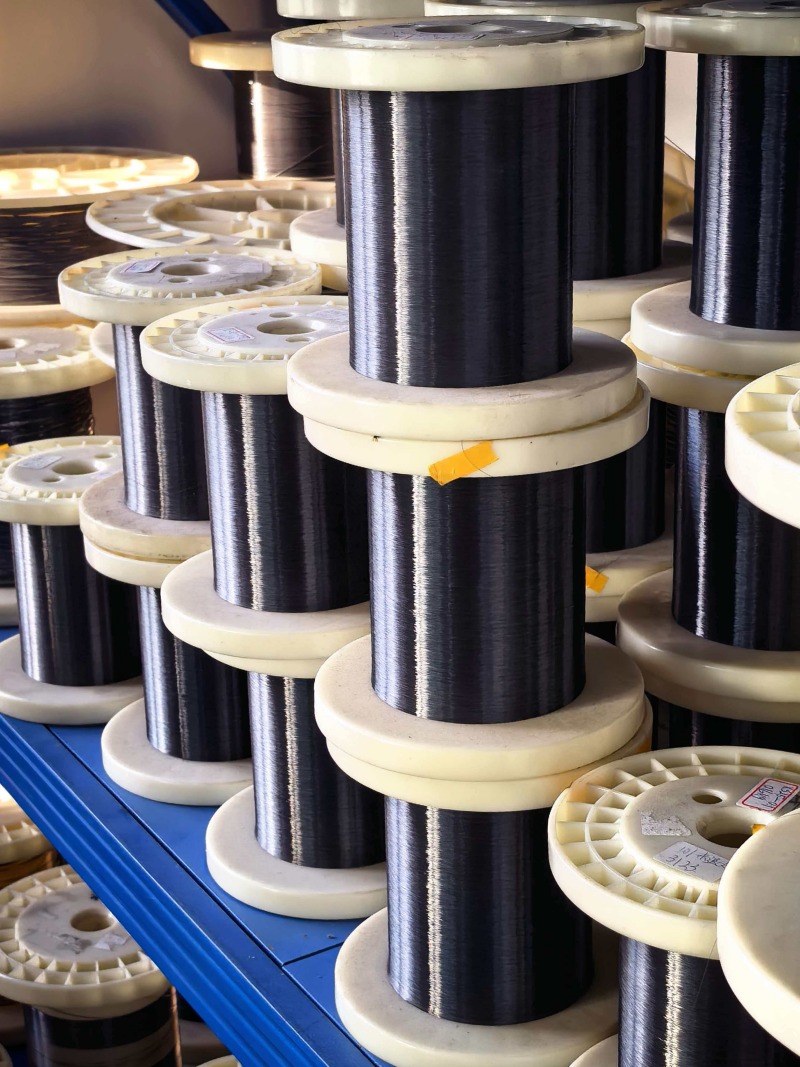
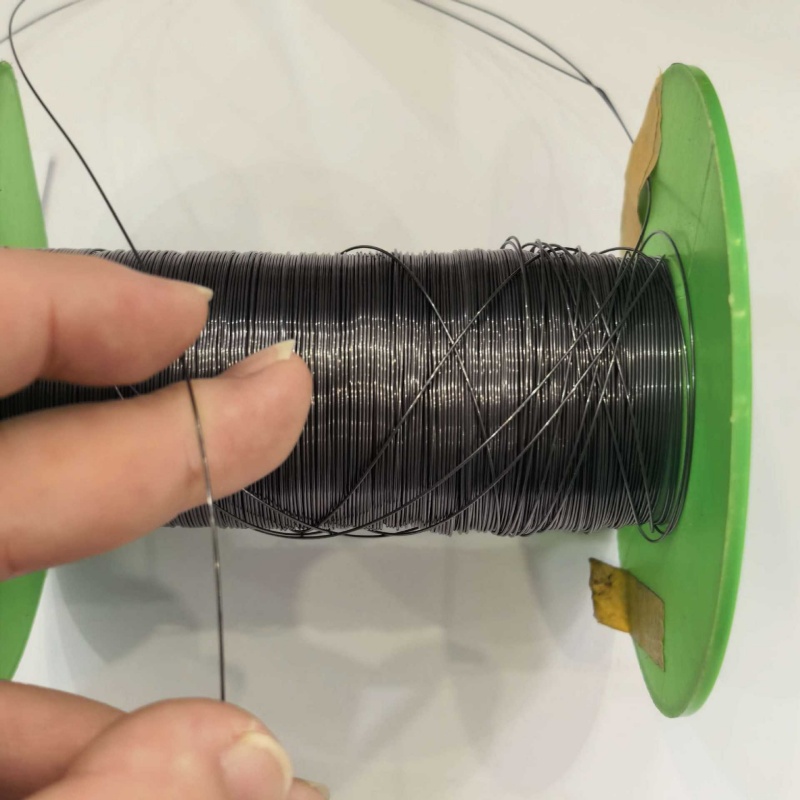
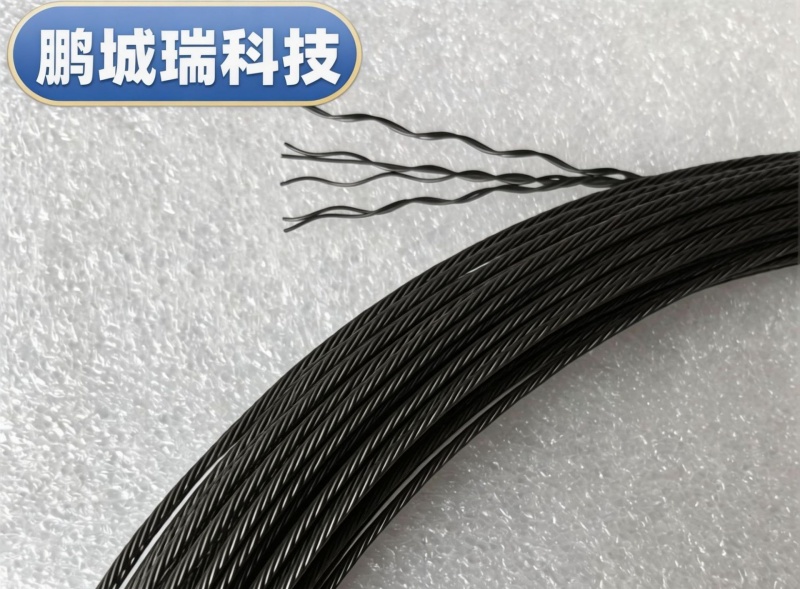
Nickel titanium alloy fiber wire
2、 The only weakness: nickel ion release issue
Long term repeated deformation, friction, and bending of titanium oxide film will cause local damage, and trace amounts of Ni ² ⁺ will precipitate into body fluids:
Low concentration nickel ions: Most humans tolerate it, with only mild short-term inflammation;
Minority nickel allergy population: After contact, there may be swelling, itching, local inflammation of the vascular endothelium, and in severe cases, rash and vascular irritation;
Long term exposure to bare nickel titanium in the blood: Accumulation of trace amounts of nickel can slightly promote platelet adhesion and increase the risk of thrombosis.
So bare nickel titanium wire cannot be directly used in clinical practice, and all commercial interventional guide wires must undergo surface coating modification.
3、 Common surface modification of clinical guide wires (significantly improving biocompatibility)
(1)Hydrophilic coating (mainstream)
PVP、 Hydrophilic polymer coatings such as polyvinylpyrrolidone:
-Reduce friction and minimize vascular intimal scratches;
-Isolate the nickel titanium substrate and block the precipitation of nickel ions;
-Antiplatelet adhesion reduces the probability of thrombosis.
(2)Oxidation strengthening treatment (electrochemical polishing+high-temperature oxidation)
Thick and dense TiO ₂ oxide layer almost blocks nickel leaching, serving as the bottom layer of the coating.
(3)Drug loaded coating (high-end interventional guide wire)
Heparin coating, anti proliferative drug coating:
-Heparin directly anticoagulates and inhibits thrombosis;
-Relieve endometrial hyperplasia and inflammatory response, commonly used for coronary and peripheral vascular guide wires.
(4)DLC diamond-like coating
Isolated metal substrate, wear-resistant and corrosion-resistant, with strong biological inertness, reducing allergies and ion release.
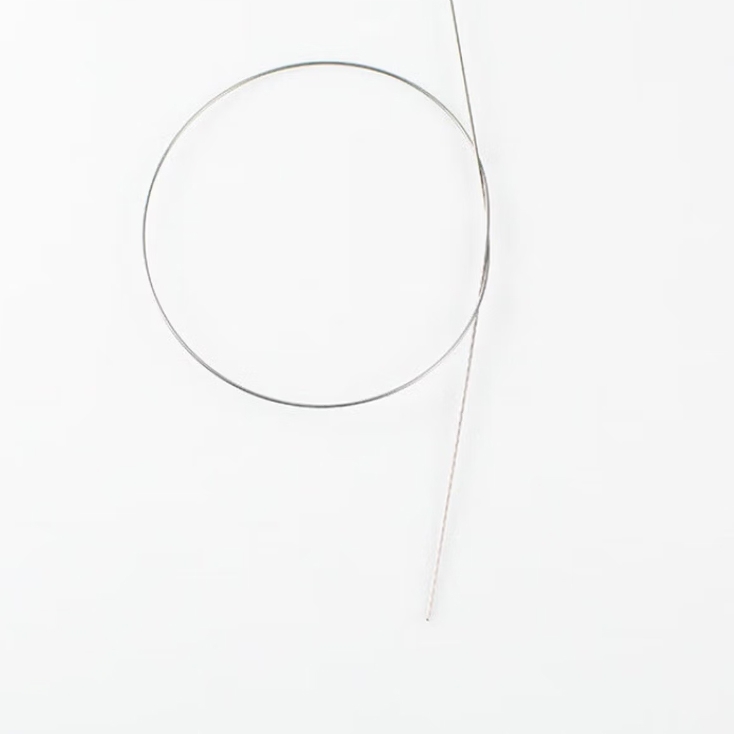
Nickel titanium alloy guide wire
4、 Performance of key biocompatibility indicators
(1)Hemolysis rate
The hemolysis rate of the modified nickel titanium guide wire is less than 5%, which meets the standards of medical implant materials and does not damage red blood cells.
(2)Coagulation performance
Naked nickel titanium easily adsorbs platelets; After coating with heparin/hydrophilic coating, the coagulation index is significantly improved and it is less likely to form blood clots.
(3)Organizational irritancy
Short term implantation: mild transient inflammation that subsides within 7-14 days;
Long term implantation: no persistent chronic inflammation, no tissue necrosis;
Except for nickel allergy patients, persistent endometrial redness and swelling may occur.
(4)Allergenicity
The allergen is nickel ions; The complete coating can completely isolate and ensure safe use for allergic individuals; Uncoated bare wire is not recommended for patients with allergies.
5、 Compare stainless steel guide wires
316L stainless steel: It can also precipitate chromium and nickel, with high hardness and easy damage to blood vessels;
Nickel titanium guide wire: After modification, the ion release is lower, the flexibility is better, the vascular stimulation is smaller, and the comprehensive biocompatibility is better than stainless steel.
6、 Applicable scenarios and precautions
Short term contact wires with the human body, such as coronary intervention, nerve intervention, peripheral vascular intervention, digestive endoscopy, urinary intervention, etc. (several minutes to several hours);
Long term implantation of nickel titanium stents is also supported by mature clinical data.
Taboo/Caution
1. For patients with nickel metal allergies, priority should be given to using fully coated guide wires or replacing PTFE pure plastic guide wires;
2. Low priced bare nickel titanium wires without surface polishing or coating are prohibited from directly contacting vascular tissue;
After repeated bending and wear of the coating, nickel precipitation will increase, and consumables cannot be disinfected and reused for one-time use.
The substrate nickel titanium itself has good biological inertness and corrosion resistance, with the only drawback being the release of nickel ions after friction/damage;
The commercially available medical nickel titanium guide wire is sealed by electrochemical oxidation and hydrophilic/heparin coating, with negligible ion release. The risk of hemolysis, inflammation, and thrombosis is extremely low, and its biocompatibility meets the requirements of various interventional surgeries. Only nickel allergy patients need to be cautious.
Pengchengrui, located in Liandong U Valley, Huiyang, Huizhou, is a one-stop supplier of nickel titanium memory alloy wire and pipe materials. Independently developed and produced * * full range of medical nickel titanium guide wires * *, using medical grade high-purity nickel titanium substrate, with excellent super elasticity, biocompatibility standards, non-magnetic compatibility with nuclear magnetic resonance, and can be matched with a complete set of processes such as hydrophilic polishing, ball head shaping, and pre bending processing. We open up sample, customized, and bulk supply to medical device manufacturers nationwide. We welcome medical device manufacturers to call us for negotiations and factory inspections to jointly build a stable upstream raw material supply chain.
Nitinol
Seamless nickel titanium tube Nickel titanium fiber wire Nickel titanium plateApplication Area
Medical Industry New Energy Aerospace Machinery Manufacturing Marine Engineering Petrochemical IndustryContact Us
Contacts:Manager Wu +86 13632667260


 WeChat
 Call me
X