
 Chinese
 English
Service Hotline
+86 18948275773+86 13632667260


The combination of nickel titanium alloy (shape memory alloy, SMA) and carbon fiber composite material (CFRP) is a typical case of performance breakthrough through "functional complementarity" - nickel titanium alloy provides unique functions such as "shape memory effect, superelasticity, and high damping", while carbon fiber composite material contributes the advantages of "high specific strength, high specific stiffness, and lightweight". After the combination of the two, it can meet the demand for "structural load-bearing+functional response" integration in multiple fields. Its application scenarios have gradually expanded from high-end fields such as aerospace to medical, automotive, intelligent equipment and other fields, as follows:
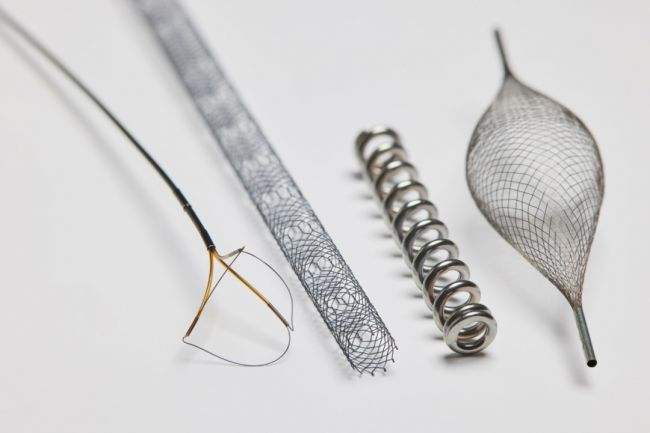
Application of Nickel Titanium Memory Alloy
1、 Aerospace field: the demand for "structural functional integration" in extreme environments
Aerospace has strict requirements for lightweight, reliability, and extreme environmental resistance of materials. The characteristics of nickel titanium alloy/carbon fiber composite materials can accurately match the following scenarios:
1. Adaptive structure and intelligent components
Adaptive wing/tail: Traditional wing control surfaces rely on mechanical drive, with complex structures and heavy weights. The composite material can be used to make "smart skin" or "adaptive wing ribs" - using the shape memory effect of nickel titanium alloy, deformation is triggered by temperature or stress, driving the carbon fiber composite material structure to fine tune (such as changing the curvature of the wing), achieving flight attitude optimization (such as increasing lift during takeoff and landing and reducing drag during cruising), while the carbon fiber layer ensures structural strength, significantly reducing the weight of the drive system (according to research, it can reduce weight by 20% -30%).
Spacecraft deployment mechanism: The deployment components such as satellite antennas and solar panels need to be folded during launch (to save space) and precisely deployed after entering orbit. Composite materials can be used to make deployment arms: nickel titanium alloy provides "self deployment power" (after pre deformation, the shape is restored by heating in orbit), carbon fiber composite materials ensure the structural stiffness and anti space radiation performance after deployment, and are lighter than traditional metal deployment mechanisms (with a strength increase of more than 40%), avoiding complex motor drive devices.
2. Vibration control and impact protection
Engine compartment noise reduction and vibration reduction: Aircraft engines generate high-frequency vibrations during operation, which can easily lead to structural fatigue and noise transmission. Embedding nickel titanium alloy wire/particles into the engine compartment wall panel of carbon fiber composite material, utilizing the high damping characteristics of nickel titanium alloy (energy absorption capacity 3-5 times that of ordinary metals), can effectively attenuate vibration energy, while the carbon fiber layer ensures the load-bearing strength of the cabin, balancing "vibration reduction+lightweight".
Spacecraft landing buffer: When the probe lands, it needs to withstand huge impacts, and traditional buffer structures (such as metal honeycomb) are heavy and have limited buffering efficiency. Composite materials can be used to make buffer brackets: the superelasticity of nickel titanium alloy (deformation can reach 8% -10% and can be restored) can absorb impact energy, and the carbon fiber layer provides support stiffness, which can improve landing safety while reducing weight (such as candidate materials for landing legs of Mars probes).
2、 Medical field: dual requirements of biocompatibility and precise functionality
The core requirements for materials in the medical field are biocompatibility, mechanical compatibility, and functional controllability. The composite of nickel titanium alloy (widely used in medical implants) and carbon fiber composite material (low modulus, corrosion-resistant) can solve the limitations of a single material:
1. Bone repair and replacement implants
Artificial bone/bone fixation plate: Although pure nickel titanium alloy has shape memory and superelasticity, its modulus (about 70GPa) is much higher than that of human bone (10-30GPa), which can easily lead to "stress shielding" (the implant bears too much load, and the bone tissue shrinks due to insufficient force); The modulus of carbon fiber composite materials can be adjusted through fiber layup design (10-60GPa), and when combined with nickel titanium alloy, it can achieve "modulus matching+strength support" - nickel titanium alloy provides shape memory (such as pre shaping through body temperature recovery after fracture fixation plate implantation, closely adhering to the bone surface), carbon fiber layer adjusts the overall modulus, reduces stress shielding, and the corrosion resistance of carbon fiber can avoid the risk of long-term release of nickel ions (surface modification is needed to further improve biocompatibility).
2. Minimally invasive medical devices
Interventional surgical instruments: such as vascular stents and intervertebral foramen endoscope tools. Composite materials can be used to make "smart stents": the super elasticity of nickel titanium alloy ensures the expansion and support of the stent inside the blood vessel, and the carbon fiber coating (thin and smooth) can reduce the friction coefficient between the stent and the blood vessel wall, reducing the risk of thrombosis; In addition, the X-ray transparency of carbon fiber (different from metal) can avoid the interference of metal on the image during surgery and improve the accuracy of the operation.
3、 Automotive field: balance between lightweight and safety performance
The core demands of the automotive industry are weight reduction (reducing fuel/electricity consumption), improving collision safety, and optimizing handling. Nickel titanium alloy/carbon fiber composite materials can replace traditional steel/aluminum alloys in key structural components
1. Vehicle structure and safety components
Anti collision beam/energy absorbing box: Traditional steel anti-collision beams are heavy, while aluminum alloys are lightweight but have low energy absorption efficiency. The composite anti-collision beam can be designed as a "carbon fiber load-bearing layer+nickel titanium alloy energy absorbing core" - the carbon fiber layer provides high stiffness (ensuring that the vehicle body does not deform during collision), and the nickel titanium alloy core (such as honeycomb structure) utilizes super elasticity and shape memory effect to absorb energy through large deformation during collision (energy absorption density is 2-3 times that of steel), and can partially recover its shape after collision (for easy maintenance and testing after accidents), while the overall weight is reduced by more than 40% compared to steel parts.
Adaptive chassis components: such as suspension springs and stabilizer bars. Composite springs can achieve "stiffness adaptation" through the shape memory effect of nickel titanium alloy - according to road conditions (such as bumpy roads), the deformation of nickel titanium alloy is triggered by temperature or current to change the effective length of the spring, thereby adjusting the stiffness and improving comfort; The carbon fiber layer ensures the load-bearing strength and fatigue life of the spring, and reduces weight by more than 50% compared to traditional steel springs, lowering the center of gravity of the vehicle and improving handling.
2. New energy vehicle battery pack shell
The battery pack needs to be "lightweight+impact resistant+heat-insulating", and the composite shell can be designed as a "carbon fiber outer layer (high rigidity, puncture resistant)+nickel titanium alloy inner layer (shape memory, heat-insulating)" - the carbon fiber layer resists external impact and avoids battery damage; The inner layer of nickel titanium alloy can undergo temperature triggered deformation (such as expanding and sealing gaps) during battery thermal runaway, reducing heat diffusion. At the same time, its high damping characteristics can attenuate the vibration of the battery pack during driving, protecting the battery cells.
4、 The field of intelligent equipment and robotics: the synergy of flexible drive and structural stiffness
Intelligent equipment such as industrial robots and flexible robotic arms need to balance structural stiffness (to ensure positioning accuracy) and flexible driving (to adapt to complex work scenarios). The "rigid flexible adjustable" characteristic of composite materials can meet this requirement:
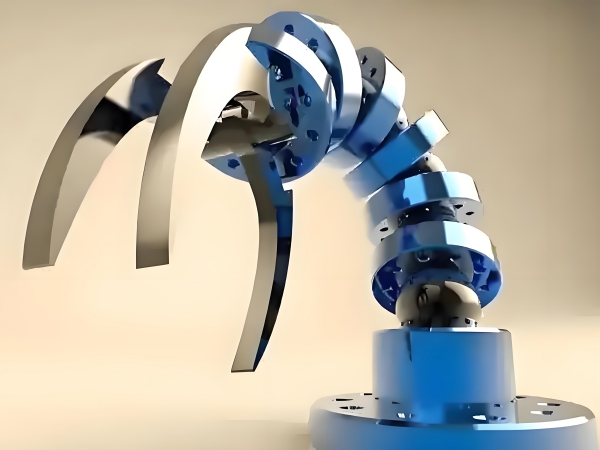
Flexible robotic arm
1. Flexible robotic arm and actuator
Industrial robot arm: Traditional robotic arms rely on motors and reducers to drive, with complex structures and insufficient flexibility (which can easily damage fragile workpieces). The composite material robotic arm can be designed as a "carbon fiber skeleton+nickel titanium alloy driving wire" - the carbon fiber skeleton ensures the overall stiffness of the arm (positioning accuracy can reach 0.1mm), and the embedded nickel titanium alloy wire (such as shape memory alloy wire) serves as the "driving muscle", which triggers deformation (contraction or bending) through electrical heating, driving the robotic arm to achieve flexible motion (such as grasping fragile glass products and food), without the need for complex mechanical transmission, significantly simplifying the structure and reducing weight.
2. Intelligent sensing and adaptive structure
Vibration monitoring and compensation components: such as isolation platforms for precision instruments. The composite material platform can integrate a "nickel titanium alloy sensing driving unit+carbon fiber bearing layer" - the nickel titanium alloy unit senses external vibrations through deformation (as a sensor), and actively deforms (as a driver) based on the sensing signal to counteract vibration interference; The carbon fiber layer ensures the rigidity and stability of the platform, making it suitable for vibration sensitive scenarios such as semiconductor manufacturing and optical inspection.
5、 Application Challenges and Future Directions
Although nickel titanium alloy/carbon fiber composite materials have broad application prospects, the following key technological bottlenecks still need to be overcome:
1. Interface bonding performance: The interface compatibility between nickel titanium alloy (metal) and carbon fiber composite material (non-metal) is poor, and delamination is prone to occur. Surface modification is needed to improve the interface bonding strength.
2. Cost control: Nickel titanium alloy and carbon fiber are both high cost materials, and their composite processes (such as hot pressing and winding) are complex, which limits their large-scale application in the civilian field. It is necessary to develop low-cost raw materials (such as recycled carbon fiber) and efficient composite processes.
3. Performance consistency: The performance of composite materials is greatly affected by process parameters such as fiber layup and nickel titanium alloy distribution. It is necessary to establish a precise process performance control model to ensure consistency in mass production.
In the future, with breakthroughs in interface modification, intelligent design (such as integrated sensing driving control functions) and other technologies, nickel titanium alloy/carbon fiber composite materials are expected to achieve large-scale applications in more fields, especially in emerging scenarios such as intelligent construction (such as adaptive curtain walls) and deep-sea equipment (such as high-pressure structural components), further expanding the boundaries of "structure function integration" materials.
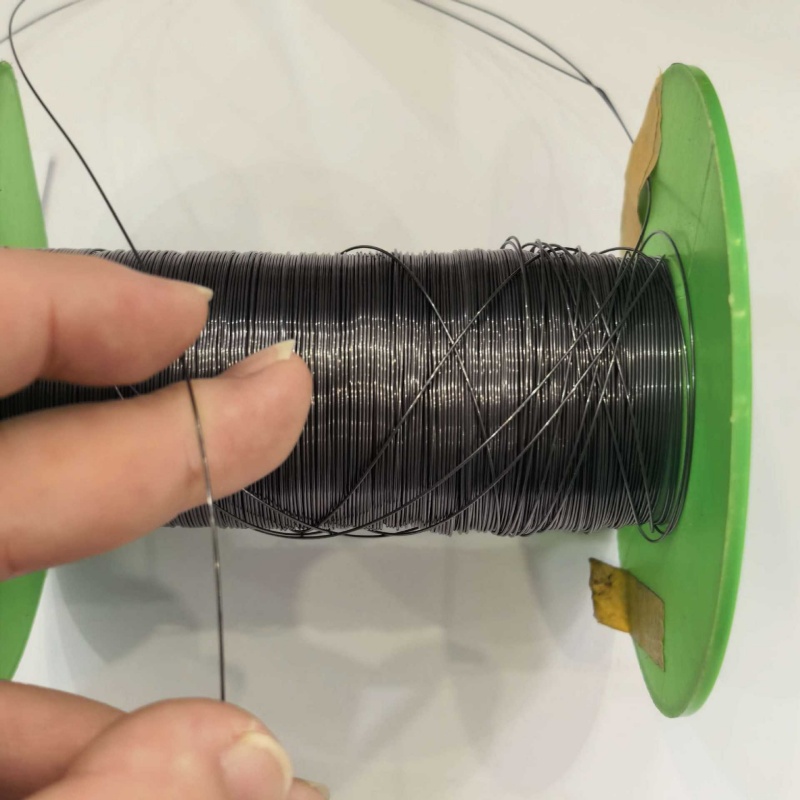
Wuge Nickel Titanium Alloy Material has developed a composite material called "Nickel Titanium Alloy Carbon Fiber" by combining nickel titanium alloy fibers with carbon fibers. Interested parties are welcome to explore the material application market together.
Nitinol
Seamless nickel titanium tube Nickel titanium fiber wire Nickel titanium plateApplication Area
Medical Industry New Energy Aerospace Machinery Manufacturing Marine Engineering Petrochemical IndustryContact Us
Contacts:Manager Wu +86 13632667260


 WeChat
 Call me
X