
 Chinese
 English
Service Hotline
+86 18948275773+86 13632667260


Carbon fiber cloth is a unidirectional woven fabric made from carbon fiber as raw material. It is a high-performance reinforcement material with characteristics such as high strength, lightweight, and corrosion resistance. It is widely used in building reinforcement, industrial manufacturing, and scientific research fields. Nickel titanium alloy carbon fiber cloth is a composite material or intelligent hybrid composite material made by combining nickel titanium alloy fibers with carbon fibers. The following is a detailed explanation of Wuge nickel titanium alloy from different perspectives:
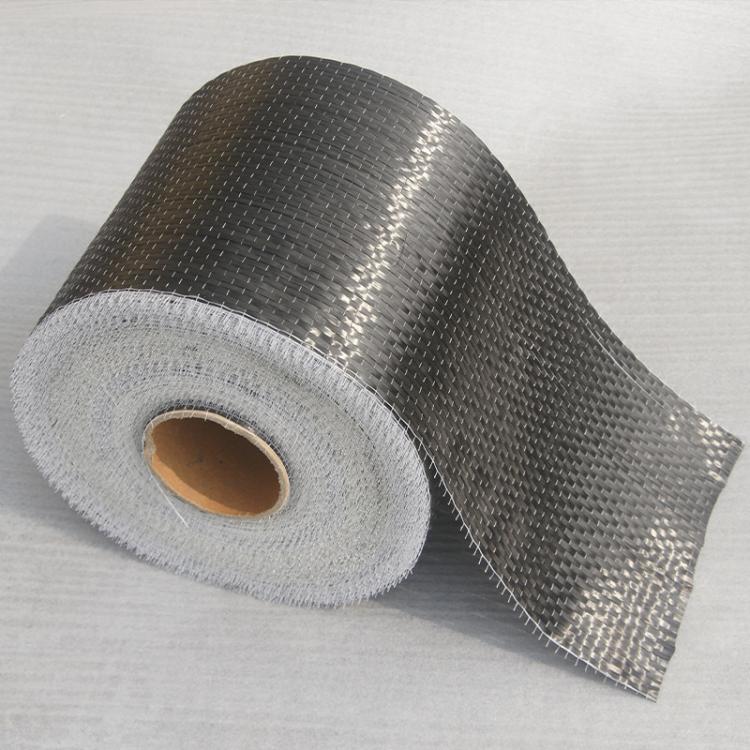
Nickel titanium alloy fiber cloth
1、 Nickel titanium alloy carbon fiber cloth, product definition
Carbon fiber cloth, also known as carbon fiber cloth, carbon fiber cloth, carbon fiber woven cloth, carbon fiber reinforced cloth, etc., is a sheet-like material made of carbon fiber filaments through unidirectional weaving technology.
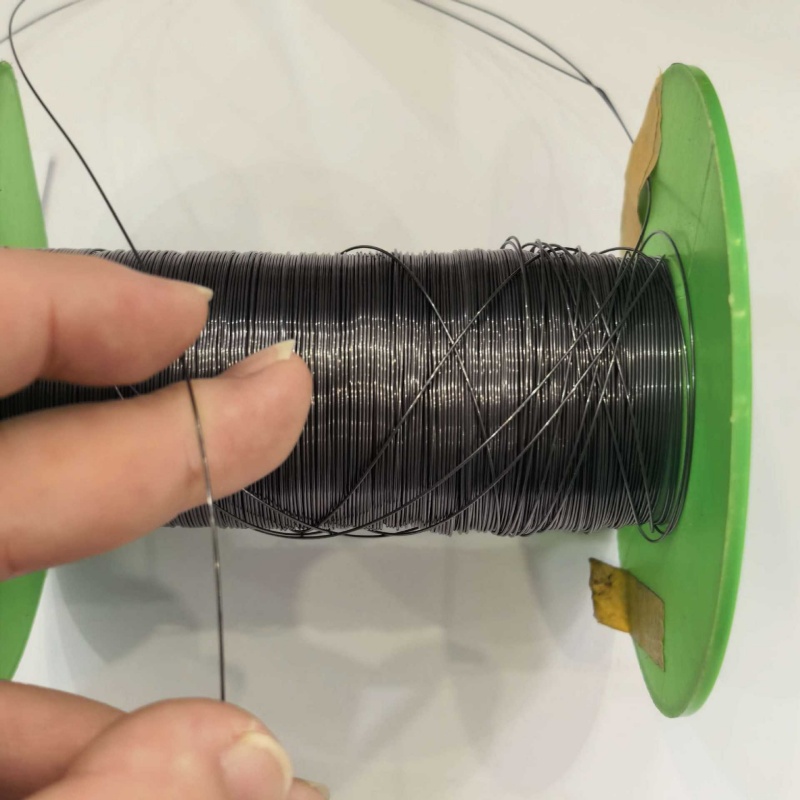
Wu Ge nickel titanium alloy proposes to combine nickel titanium alloy (NiTi) fibers with carbon fibers to produce "nickel titanium alloy carbon fiber cloth" composite materials or intelligent hybrid composite materials. This material is no longer a traditional structural material, but an intelligent structural material or multifunctional material. Nickel titanium alloy carbon fiber cloth, a new material that combines the high strength, wear resistance, and corrosion resistance of carbon fiber cloth with the shape memory effect, super elasticity, high damping, and self-healing ability of nickel titanium alloy, will create the next generation of materials with sensing, response, and environmental adaptability.
2、 Nickel titanium alloy carbon fiber cloth, material performance optimization
Improving interface bonding strength: By incorporating nickel titanium alloy fibers into carbon fibers, the interface bonding strength between carbon fibers and nickel titanium alloys can be improved. The universal carbon fiber density is about 1.8 g/cm ³, while our nickel titanium carbon fiber density is 6.4 g/cm ³. By incorporating nickel titanium alloy fibers into the carbon fiber cloth, the toughness of the product can be improved, effectively improving the defects of high brittleness and low tensile strength of the carbon fiber cloth, and enhancing the overall mechanical properties of the composite material.
Enhanced comprehensive mechanical properties: Nickel titanium alloy and carbon fiber composite can be made into composite materials with high strength, high hardness, and low friction coefficient. By adjusting the composite ratio and structural design of the two, higher specific strength and modulus can be achieved to meet the requirements of lightweight and high-performance materials in fields such as aerospace and automotive.
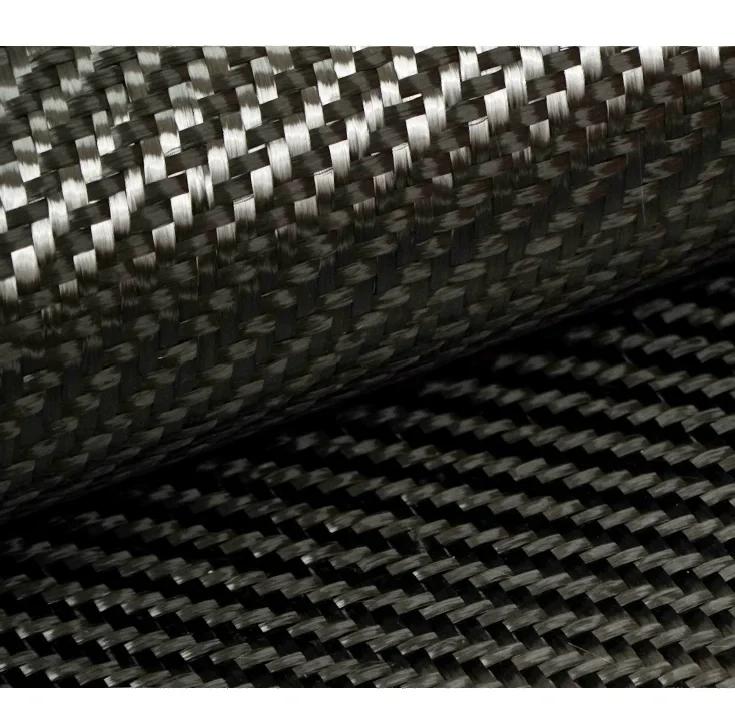
Nickel titanium alloy carbon fiber cloth
3、 Nickel titanium alloy carbon fiber cloth, expanding application fields
In the aerospace field, nickel titanium alloys have excellent fatigue resistance, stress corrosion cracking resistance, and thermal stability. After being combined with carbon fiber, it can be used to manufacture aircraft skins, engine blades, landing gear components, drone bodies, etc. It can also utilize its shape memory effect to achieve shape change and self-healing of the fuselage, providing new possibilities for aircraft design and maintenance.
Biomedical field: Nickel titanium alloy has good biocompatibility and shape memory effect, while carbon fiber cloth has high strength and lightweight. The combination of the two can be used to manufacture new types of medical implant devices, such as degradable bone fixation devices, vascular stents, etc., and is expected to play an important role in the biomedical field.
In the field of electronic devices, nickel titanium alloy can be used to manufacture electronic components such as micro relays and sensors. After being combined with carbon fiber cloth, the performance of electronic devices can be further improved, such as manufacturing sensors with higher sensitivity and stability, or for the preparation of flexible electronic devices, meeting the development needs of miniaturization and flexibility of electronic devices.
In the automotive field, the high strength and low friction coefficient of nickel titanium alloy carbon fiber cloth composite materials make them suitable for the manufacturing of automotive parts, such as engine components, transmission system components, etc., which can improve the performance and reliability of automobiles, while reducing their weight and energy consumption.
4、 Nickel titanium alloy carbon fiber cloth, advantages and challenges
Advantage:
·Functional diversity: Simultaneously possessing multiple functions such as load-bearing, driving, sensing, shock absorption, and self-healing.
·Highly integrated: actuators (motors, hydraulic cylinders) and sensors are directly integrated into structural materials, eliminating a large number of external parts, reducing weight, and simplifying design.
·Silent operation: NiTi phase change drive has almost no noise.
Challenge:
·Interface bonding: The interface bonding strength between NiTi and carbon fiber is crucial, and poor interfaces can become a source of damage.
·Driving efficiency: The electric heating driving efficiency is relatively low, with thermal hysteresis phenomenon, and the response speed is not as fast as piezoelectric materials.
·The manufacturing process is complex: how to accurately lay and position NiTi wires in the complex carbon fiber prepreg structure, and ensure that they are not damaged during the curing process, is a manufacturing challenge.
·The control system is complex: precise thermal management and control strategies are required to precisely drive NiTi wires.
·High cost: High performance NiTi alloy and carbon fiber are both expensive materials, and the cost of composite is even higher.
In summary, the application of nickel titanium alloy carbon fiber cloth and composite materials represents a paradigm shift in materials science from "passive" to "active". Although most applications are still in the laboratory research and prototype stage, their disruptive potential in fields such as aerospace, biomedicine, and high-end robotics is enormous, and it is one of the core directions for the future development of intelligent structures.
Nitinol
Seamless nickel titanium tube Nickel titanium fiber wire Nickel titanium plateApplication Area
Medical Industry New Energy Aerospace Machinery Manufacturing Marine Engineering Petrochemical IndustryContact Us
Contacts:Manager Wu +86 13632667260


 WeChat
 Call me
X