
 Chinese
 English
Service Hotline
+86 18948275773+86 13632667260


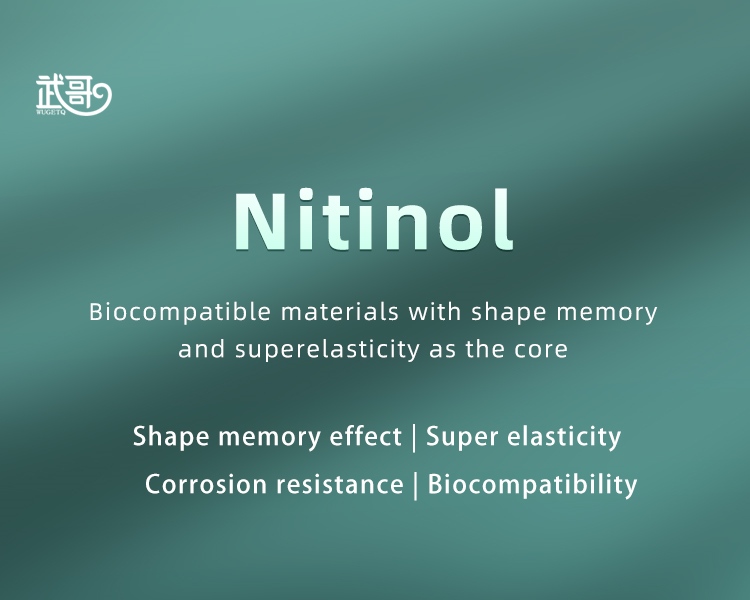


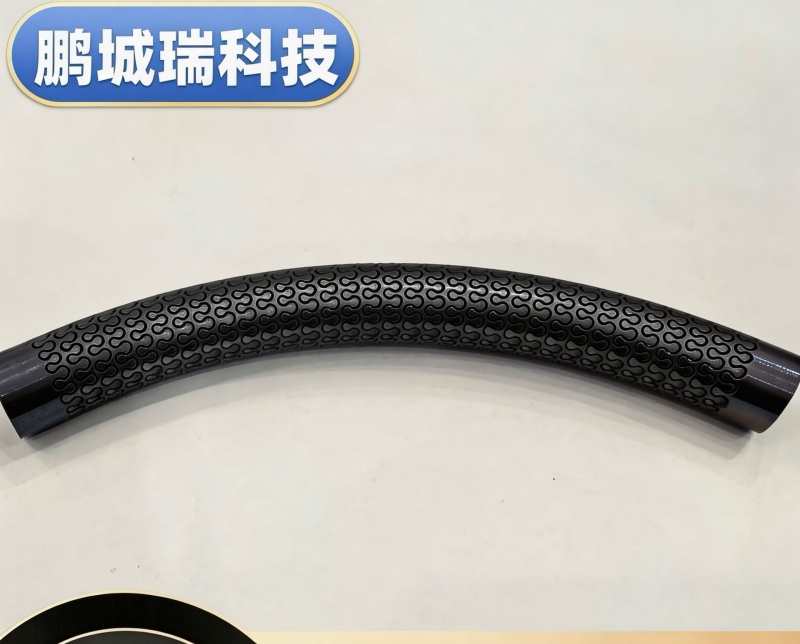
Nickel titanium memory alloy tube
In the laboratory of materials science, shape memory alloys (SMA) exhibit astonishing "intelligence" properties: when subjected to external bending deformation, they can be restored to their original state as if they have been enchanted by heating or applying current. This seemingly magical phenomenon contains profound philosophical principles of Marxism - the law of unity of opposites, the law of qualitative and quantitative change, and the law of negation of negation - which are vividly demonstrated in this intelligent material.
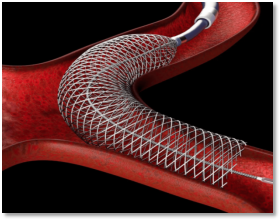
Nickel titanium alloy heart stent
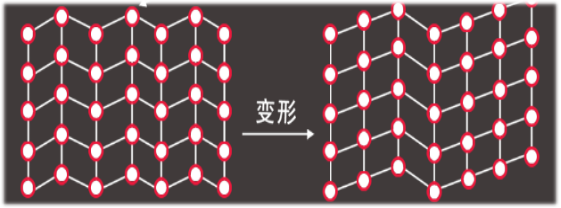
The core characteristics of shape memory alloys stem from their internal lattice transformation - martensitic transformation. Under high-temperature austenite phase, the alloy exhibits good ductility; And in the low-temperature martensitic phase, it becomes easy to bend and deform. These two phases may seem contradictory, but in reality, they transform into each other under specific conditions, forming a dialectical unity of material properties.
When a nickel titanium alloy vascular stent is implanted into the human body, it can easily bend at room temperature to adapt to narrow blood vessels, but once it enters the body temperature environment (about 37 ℃), it will return to its predetermined expanded shape and perfectly fit the inner wall of the blood vessel. This transition from softness to hardness is the dynamic balance achieved by both conflicting parties in their struggle. The seemingly irreconcilable contradiction between rigidity and softness, stability and plasticity, has found an opportunity for coordination in shape memory alloys.
More intricately, this phase transition is not a simple physical change, but a game of energy dissipation and entropy increase. As the temperature rises, the material continuously absorbs energy and the entropy value increases, ultimately causing a change in the shape of the material. (From martensitic phase to austenitic phase). The high-temperature stability of austenite phase and the low-temperature plasticity of martensite phase achieve a trade-off under temperature changes.
Quantitative and qualitative changes: temperature triggered performance leap
The transformation between rigidity and softness
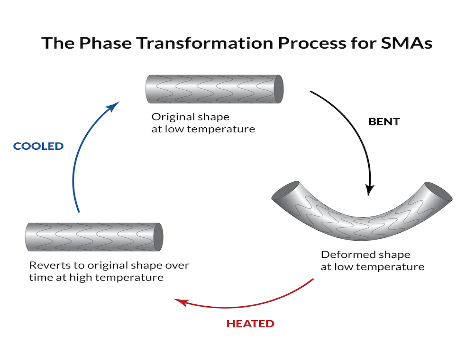
The "memory" ability of shape memory alloys is an excellent example of the law of mass interconversion. Material has three aspects of regularity: quality, quantity, and degree. Quality refers to the inherent determinacy that distinguishes things from others; Quantity is a certain regulation that can be measured by quantitative relationships, such as quantity, speed, etc., while degree is the limit of quantity that maintains the stability of matter. When the quantity of things changes to a certain extent, it will cause a qualitative change, and on the basis of the new qualitative change, matter begins a new quantitative change. For shape memory alloys, when the temperature gradually increases and the small changes in the internal lattice structure of the alloy accumulate to a critical point, the performance will undergo a qualitative leap - instantly returning to the original shape from the bent state. This is the transition process of alloys from low-temperature martensite to high-temperature austenite. This mutation is not a gradual quantitative change, but a fundamental transformation that occurs in the system under specific conditions. Moreover, after the change in morphology, the material undergoes a new quantitative change on the basis of austenite - a fundamental transformation in physical quantities such as hardness.
In engineering applications, this characteristic is cleverly utilized. For example, the automatic adjustment device for track clearance on Japan's Shinkansen uses shape memory alloy. When the temperature rises, the alloy drive device automatically shrinks the track gap; When the temperature drops, it will return to its original state. This performance leap based on temperature changes confirms Engels' statement in "Dialectics of Nature": "Any qualitative change can only be achieved through a leap
It is worth noting that this qualitative change is not unidirectional. Through repeated thermal cycling, shape memory alloys can freely switch between two phases, exhibiting rare reversibility in materials science. This bidirectional process of qualitative change is precisely the philosophical deduction that the accumulation of quantitative changes at a critical point triggers a qualitative change, which is then restored to its original state through inverse vector transformation.
Negation of Negation: Sublimation from Defect to Function
Traditional material design often pursues a flawless crystal structure, but shape memory alloys have found innovative breakthroughs in "defects". In the martensitic transformation process, lattice distortion and dislocation accumulation should have been considered defects in material properties, but in shape memory alloys, these "defects" are precisely the key to achieving intelligent performance. It is also a manifestation of the law of negation of negation.
The law of negation describes a development pattern where there are both positive and negative factors within things. Positive is the factor that maintains the existence of things, while negative is the factor that promotes the extinction of existing things. In the development of things, due to the interaction between contradictory parties, negative factors occupy the upper position, moving from affirmation to self negation, and then from self negation to higher affirmation. The negation of negation. Shape memory alloys can precisely reflect this rule. For example, nickel titanium alloys undergo significant lattice distortion and dislocation motion during phase transformation, which endow the material with superelasticity and shape memory effects due to the microstructural changes. This transformation from "defect" to "function" is a manifestation of the negation law of negation: during the phase transition process, the previously perfect "affirmation" environment of the structure is negated, resulting in defects such as dislocations on the lattice. However, this old contradiction (lattice defect) is negated under new demands and transformed into a new contradiction (intelligent performance), thereby promoting the sublimation of material properties. This process reflects the gradual progress of shape memory alloy materials towards beneficial applications for human beings, perfectly interpreting the process described by the law of negation of negation in Marxist philosophical dialectics.
The Phase Transformation Process of Material Memory Alloys
In technological applications, this process of negation of negation continues. Early shape memory alloys required high driving temperatures, which limited their application range. By doping trace elements such as cobalt and palladium to optimize the lattice structure, scientists have successfully reduced the driving temperature and expanded its applications in biomedical, aerospace, and other fields. Moreover, in the future, shape memory alloys will continue to make breakthroughs in emerging fields such as wearable devices and intelligent material systems. Every technological improvement is a negation and transcendence of the original performance.
The following are breakthroughs in the current application of material memory alloys:

Application examples of shape memory alloys
Philosophical Implications of 03 Shape Memory Alloy
The story of shape memory alloys tells us that the essence of materials science is not simply physical accumulation, but the art of contradictory motion. The seemingly opposing characteristics of rigidity and softness, stability and plasticity, defects and functionality, transform into each other under specific conditions, giving rise to new possibilities.
When we examine the material world from the perspective of Marxist philosophy, we often find that innovative inspiration is hidden in the tension of contradictions. Perhaps the key to the next material revolution lies in some overlooked 'defect' or 'contradiction', waiting to be discovered through philosophical thinking.
As Engels once said, "The true perfection of any science lies in its ability to be applied in practice." The development of shape memory alloys is the best footnote to the combination of materials science and Marxist philosophy.
conclusion
Life is like a shape memory alloy. Faced with important crossroads in life, seemingly opposing options may make us hesitate, or we may be afraid of making the wrong choice and become hesitant after making a decision.
But just like shape memory alloys, these options are just some corresponding forms of martensite and austenite. Why bother with what form they are? As long as the timing is right, no matter what choice is made, even if we later realize that the initial choice seems not suitable for us, we can change the "temperature" of our lives like shape memory alloys, allowing martensite and austenite to transform into each other.
In short, life has unexpected faults, don't be afraid to make choices, worry about choices, let go of your hands and feet, in order to enjoy the vastness of life.
Nitinol
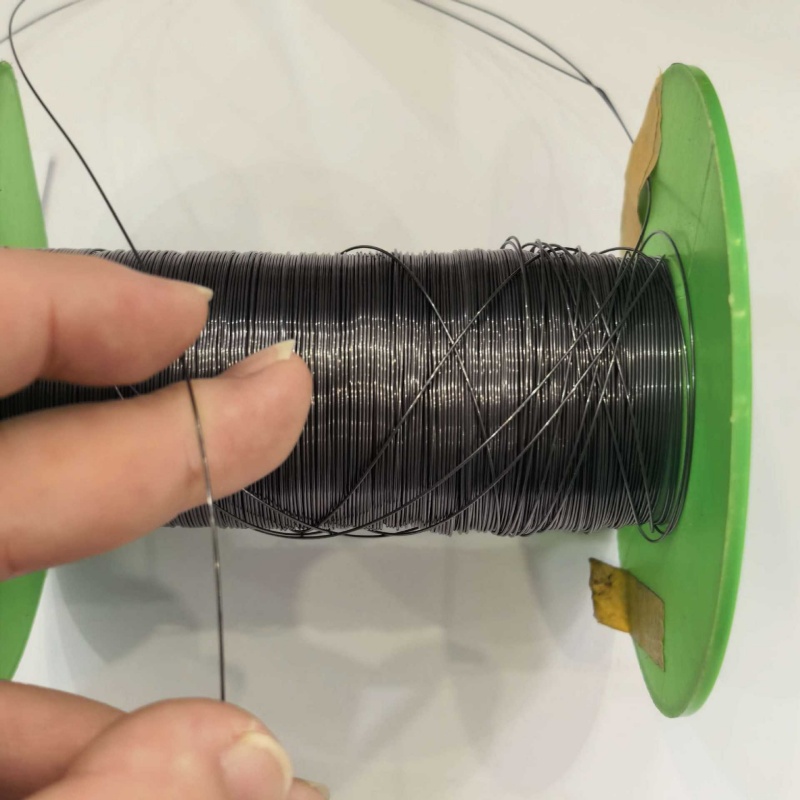
Seamless nickel titanium tube Nickel titanium fiber wire Nickel titanium plateApplication Area
Medical Industry New Energy Aerospace Machinery Manufacturing Marine Engineering Petrochemical IndustryContact Us
Contacts:Manager Wu +86 13632667260


 WeChat
 Call me
X