
 Chinese
 English

Service Hotline
+86 18948275773+86 13632667260



Nickel titanium (shape memory alloy) is easily cracked/broken when bent at room temperature, which is completely different from ordinary stainless steel. Whether it can be bent and how to bend it depends on two factors: the thickness of the plate and whether it is cold worked or hot formed
1、 Will it break?
1. Thin sheet (≤ 0.3mm): Be careful with small angle bending at room temperature, but it is still prone to breakage after repeated bending;
2. Nickel titanium plates with a thickness of 0.5mm or thicker: there is a high probability of cracking or breaking when bent directly at room temperature.
Characteristics of nickel titanium alloy: limited plasticity in martensitic state at room temperature, with significant rebound; Austenitic state (high temperature) is hard and almost unable to break.
>Key point: Nickel titanium is not used for cold bending processing like ordinary steel plates.
> ✅ Allow: small deformation, single bending;
> ❌ Prohibited: Large angle bending, repeated bending, sharp and sharp angle bending, highly prone to breakage.
Distinguishing between two states
-Martensitic state (low temperature, annealed nickel titanium): relatively soft and capable of slight deformation (i.e. shape memory deformation, usually 6-8% strain at most, exceeding which it will break); Once the bending deformation exceeds this limit, it will directly fracture.
-Austenitic body shape (high room temperature): very hard, unable to break, easily breakable with force, with huge rebound.
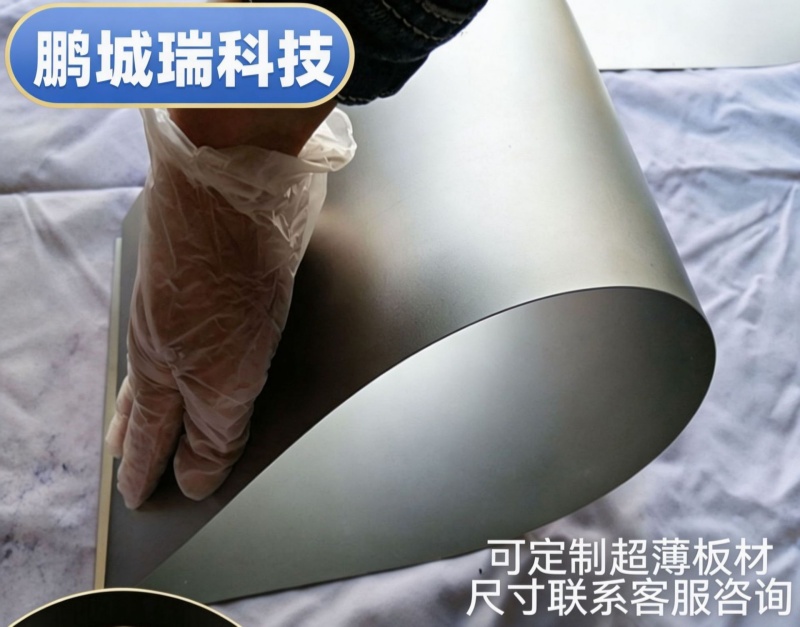
Nickel titanium alloy sheet
2、 How to fold (two processes)
Option 1: Martensitic Cold Bending (Suitable for Thin Plates, Commonly Used for DIY)
Prerequisite: The material is annealed martensitic nickel titanium plate (a deformable memory plate specifically sold by the merchant, not in the hardened state)
1. First, confirm the thickness of the board and try to use thin sheets ranging from 0.1-0.3mm; Cold folding is not recommended for thick plates.
2. The bending radius cannot be sharp! When the bending radius is greater than or equal to 3 times the thickness of the sheet, the sharp corner R=0 will definitely crack.
3. Slowly and uniformly shape at once, do not bend back and forth, as bending back and forth can quickly lead to fatigue and fracture.
4. After bending: If shape memory effect is required, a shaping heat treatment should be carried out after bending and shaping: restrain the shape, keep it at 400-500 ℃ for a few minutes, and fix the shape with water/air cooling.
>Disadvantages: The deformation cannot be large, thick plates are not suitable, and the rebound is obvious.
Option 2: Hot forming (industrial preferred, thick plate, large angle)
Nickel titanium is heat formed at high temperatures, not by bending, but by high-temperature pressing
1. Make the mold into the desired curved shape;
2. Place the nickel titanium plate on the mold and clamp it securely;
3. Heat to 400-550 ℃ and keep warm for 10-30 minutes;
4. Keep the clamping state cool to room temperature, release it, permanently shape it, and have a memory effect.
>This method is not easy to break and is suitable for thick plates and complex bending; Requires heating furnace/high-temperature spray gun+high-temperature resistant mold, high DIY risk, high-temperature oxidation.
3、 Common pitfalls
1. Like folding stainless steel, the pliers clamp tightly, the sharp corners bend → directly break;
2. Repeatedly bend and test memory → fatigue cracks, quickly break;
3. I bought austenitic hardened nickel titanium plate, which is very hard at room temperature and easily breaks when folded;
4. Excessive deformation: If the bending strain exceeds 8%, it will directly fracture.
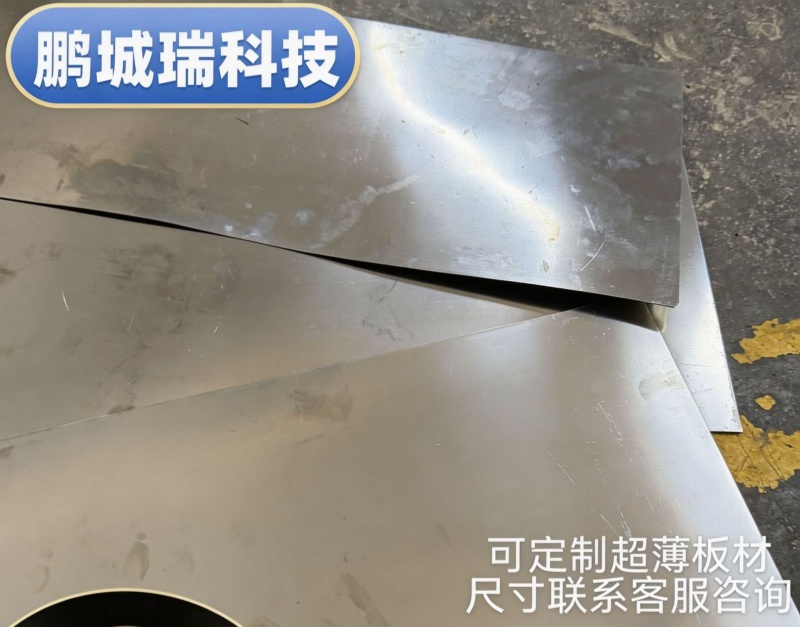
Nickel titanium alloy sheet
4、 A brief summary
-Thin plate (0.1~0.3mm annealed martensitic nickel titanium): can be carefully cold folded, large angles/sharp corners may break;
-Nickel titanium plate with a thickness of over 0.5mm: Do not bend it hard at room temperature, it will basically break, and can only be formed by hot molding with molds;
-Bending must have rounded corners, formed in one go, and repeated bending is prohibited.
Pengchengrui Technology in Huizhou City specializes in customized processing of nickel titanium memory alloy sheets, and can customize various ultra-thin nickel titanium sheets according to needs, taking into account size, phase transition temperature, and surface process requirements. Support for drawing and sampling, integrating raw materials and finished product processing, with rich experience in nickel titanium forming, effectively solving processing problems such as bending and shaping, and efficiently delivering small batch samples to large batch production.

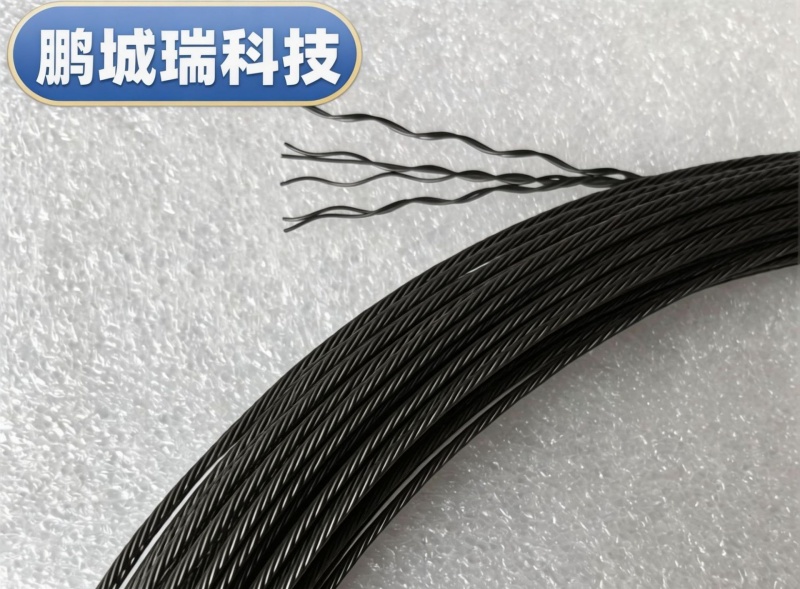
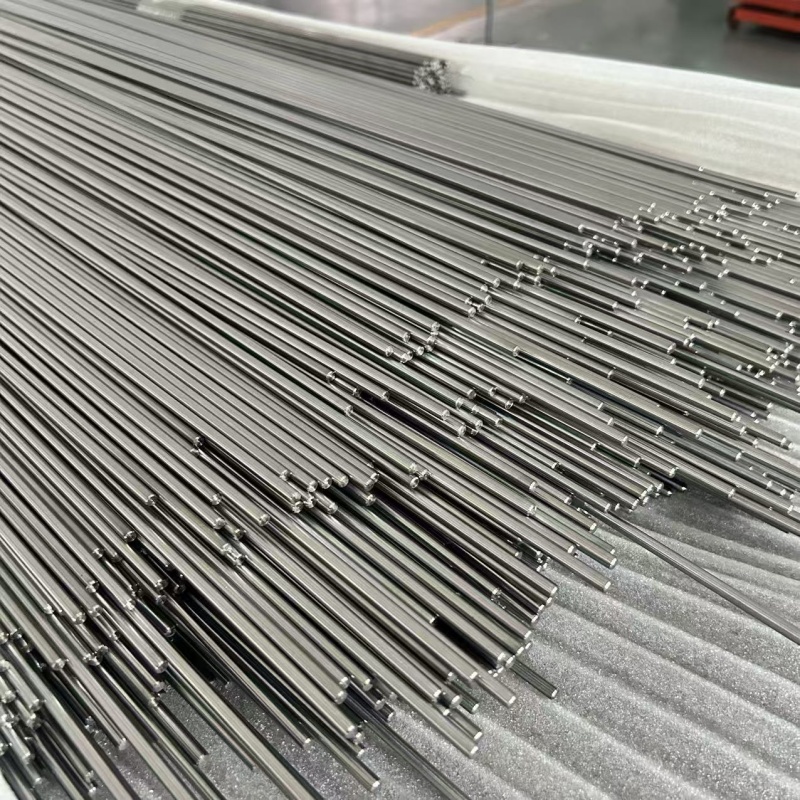
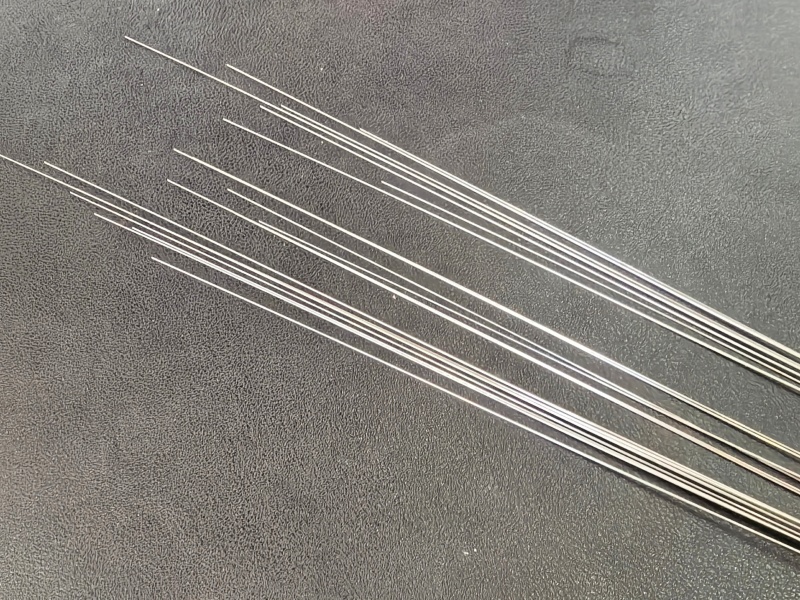

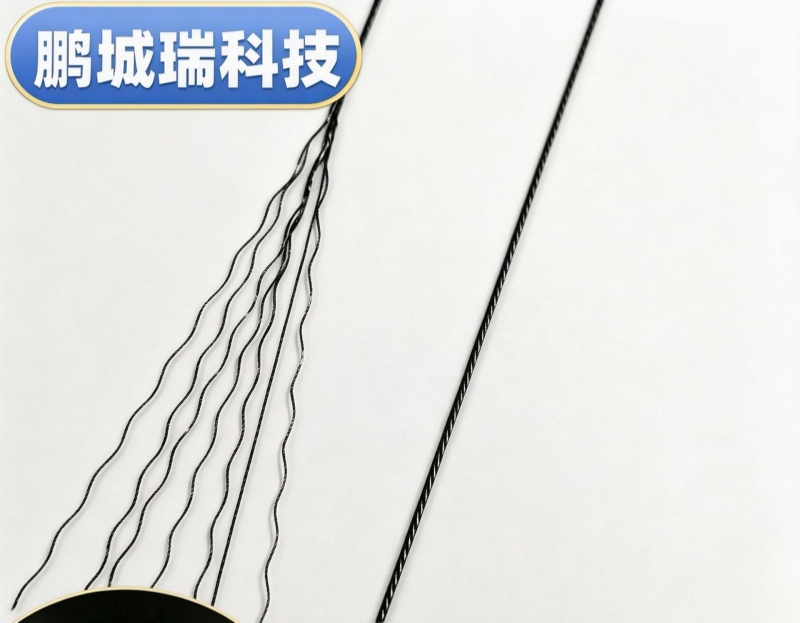
Nitinol
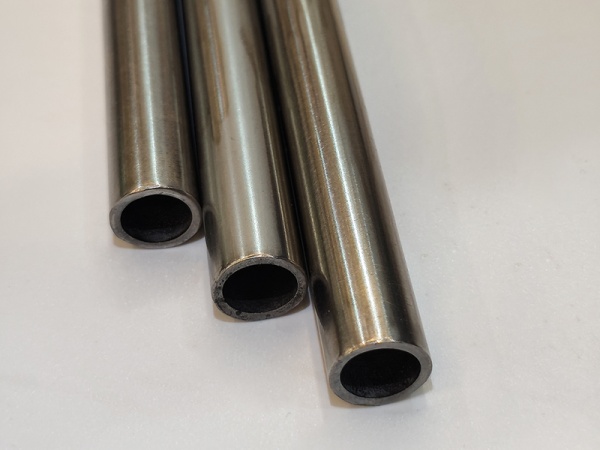
Seamless nickel titanium tube Nickel titanium fiber wire Nickel titanium plateApplication Area
Medical Industry New Energy Aerospace Machinery Manufacturing Marine Engineering Petrochemical IndustryContact Us
Contacts:Manager Wu +86 13632667260


 WeChat
 Call me
X