
 Chinese
 English
Service Hotline
+86 18948275773+86 13632667260


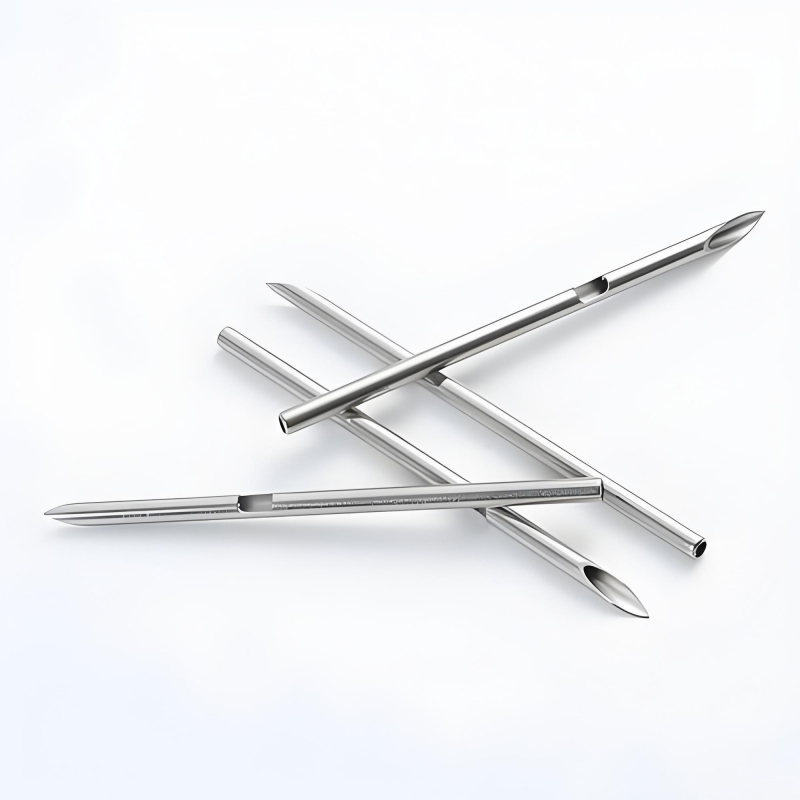
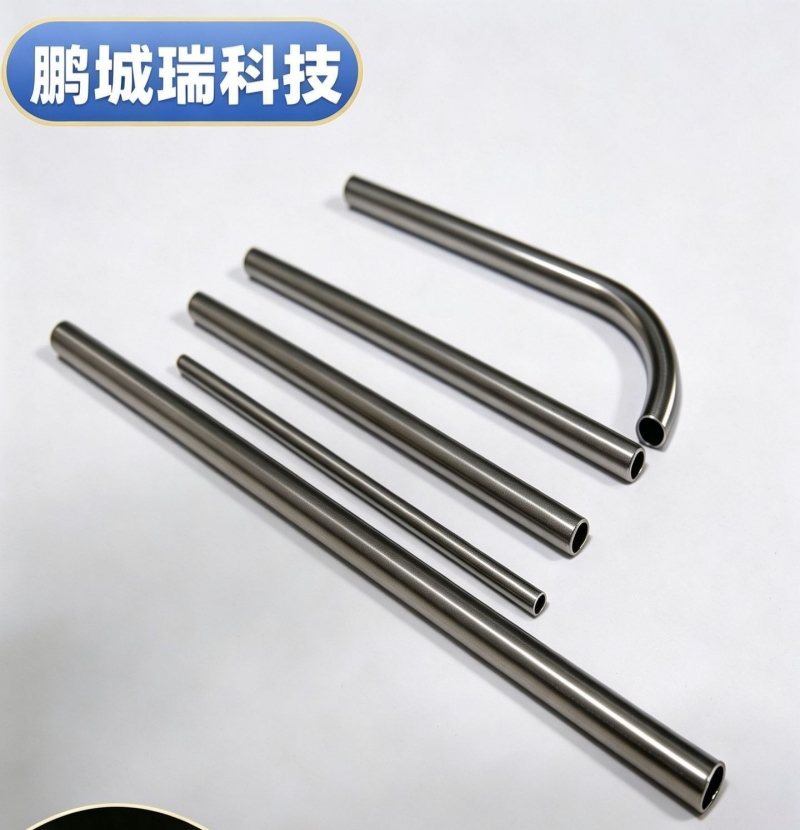
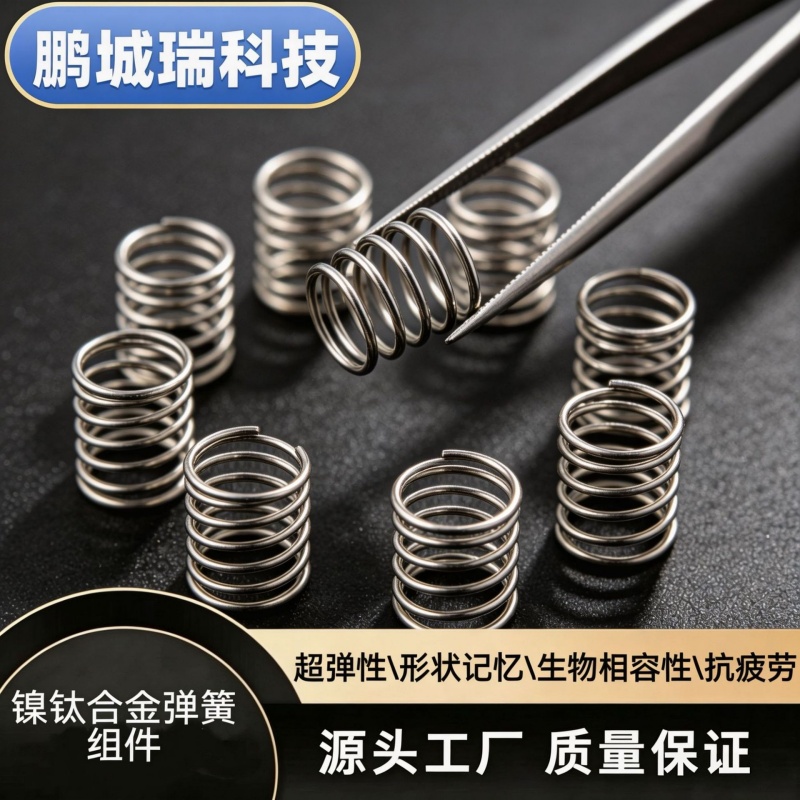
Nickel-titanium alloy thin-walled capillaries, with their unique advantages such as shape memory, superelasticity, and biocompatibility, coupled with domestic technological breakthroughs that have broken the import monopoly, will continue to deepen their applications in traditional fields such as healthcare and aerospace. At the same time, they will expand into frontier fields such as quantum technology and new energy. The overall application prospects are very broad, specifically reflected in the following aspects:
1. Healthcare field:
domestic substitution accelerates, application scenarios continue to expand. This field is its core and most promising application area. On the one hand, the advancement of domestic substitution has opened up a huge market space for it. Previously, domestic medical-grade nickel-titanium alloy capillaries were almost entirely imported. However, under the leadership of the National High-Performance Medical Device Innovation Center, domestic mass production and downstream supply of this product have been achieved. In the next 2-3 years, production will gradually increase, and it is expected to fully achieve domestic substitution of key raw materials for vascular intervention devices. On the other hand, application scenarios continue to expand. Currently, they are used in minimally invasive intervention devices such as vascular stents, guidewires, and heart valves. In the future, they will penetrate into more medical sub-fields such as orthopedics, spine, and urology. At the same time, with the development of technologies such as single-cell sequencing and organ chips, the demand for these ultra-thin and highly biocompatible capillaries in medical microfluidic devices will also surge. It is estimated that by 2030, the market size of related sub-sectors in the healthcare field will reach $2.3 billion.
2. Aerospace and New Energy Fields:
Demand Growth Driven by Adaptability to Extreme Environments. In the aerospace field, its superelasticity and resistance to extreme environments are highly favored, making it suitable for manufacturing key components such as engine parts and heat exchangers that can withstand high altitudes, high pressures, and drastic temperature changes. In the future, as space exploration progresses towards on-orbit resource utilization, it may also serve as a component of microreactors for on-orbit resource utilization, boosting the development of space exploration technology. In the new energy field, the thermal management system of power batteries demands high temperature resistance and stable operation from capillary structures. Nickel-titanium alloy thin-walled capillaries, with their excellent heat exchange performance, are expected to become important components in this field. It is predicted that the market size of the corresponding segment in the new energy thermal management field will reach $1.9 billion by 2030, providing a vast demand space for them.
3. Electronics and Industrial Fields:
Functional Integration Drives New Demand. In the electronics field, the small size and stable performance of this capillary make it suitable for manufacturing sensors, actuator components, and semiconductor cooling system components. As electronic devices evolve towards miniaturization and high precision, such as components with integrated sensing functions in wearable health monitoring devices, demand for it will continue to increase. In the industrial field, its corrosion resistance makes it suitable for use in scenarios involving the transportation of corrosive fluids in the chemical industry. At the same time, with the implementation of industrial IoT and digital twin technologies, it can be combined with intelligent systems for high-end sensing, hydraulic control, and other scenarios. Technologically, it will develop towards the integration of material, structure, and function, such as designing fractal flow channels and other microstructures to optimize heat transfer and other properties, adapting to more complex industrial scenarios.
4. Frontier Interdisciplinary Fields:
Cross-disciplinary Applications Open Up New Markets. With the maturity of preparation technology, nickel-titanium alloy thin-walled capillaries are gradually penetrating into multiple frontier interdisciplinary fields. In the field of quantum technology, they can serve as atomic or photon guiding cavities, providing support for the development of technologies such as quantum computing. In the field of life sciences, they can be used in microphysiological system chips for organoid culture, facilitating in-depth research in life sciences. Although these applications in frontier fields are currently in their infancy, with continuous technological breakthroughs, they will generate new application demands in the future, opening up new market spaces for nickel-titanium alloy thin-walled capillaries.
5. Manufacturing Upgrade Boosts Market
ExpansionAdvancements in manufacturing processes will also empower their application prospects. In the future, the manufacturing side will integrate artificial intelligence and machine learning to achieve intelligent optimization of process parameters such as drawing passes and annealing systems, reducing the cost of trial and error. Meanwhile, short-process technologies such as split-die casting will further develop, achieving cost reduction and efficiency enhancement. Furthermore, composite manufacturing technology combining additive and subtractive manufacturing can solve the manufacturing challenges of complex capillaries with internal microstructures, transitioning them from "meeting dimensional requirements" to "pursuing functionality and ultimate performance", thereby adapting to more previously unachievable application scenarios and further expanding their market application scope.
Nitinol
Seamless nickel titanium tube Nickel titanium fiber wire Nickel titanium plateApplication Area
Medical Industry New Energy Aerospace Machinery Manufacturing Marine Engineering Petrochemical IndustryContact Us
Contacts:Manager Wu +86 13632667260


 WeChat
 Call me
X