
 Chinese
 English
Service Hotline
+86 18948275773+86 13632667260



The stability of the shape memory effect in nickel-titanium alloys relies on its reversible martensitic transformation, and this characteristic is influenced by multiple factors such as composition, microstructure, and preparation process. By optimizing alloy composition, improving heat treatment processes, and adjusting preparation techniques, the stability of the shape memory effect can be significantly enhanced. Specific methods are as follows:
1. Optimize alloy composition to lay a solid foundation for performance
Adding specific alloying elements: Introducing trace elements such as Sc, B, and Cu can not only refine the grain size of nickel-titanium alloys but also promote the precipitation of fine and dispersed precipitates like Ti₂Ni, enhancing the reversibility of phase transformation through solid solution strengthening and precipitation strengthening. For instance, adding 0.12 wt.% Cu to NiTiCu alloy can form a fine-grained orthorhombic B19 martensite phase, which hinders crack propagation and increases its fatigue life to 3500-4000 cycles, a 2-3 times improvement compared to the basic nickel-titanium alloy. Introducing stabilizers like Mo and Zr can also adjust the phase transformation characteristics, but the addition amount must be controlled to avoid disrupting the original phase transformation rules of the alloy.
Precise control of nickel-titanium ratio: The atomic ratio of nickel to titanium needs to be precisely controlled at around 50-51 at%. Any deviation in the ratio can significantly affect the reversibility of phase transformation. For example, during laser powder bed fusion preparation, the normalized energy input rate can be regulated to reduce the volatilization loss of nickel elements and avoid a decrease in the stability of the memory effect due to compositional shifts.
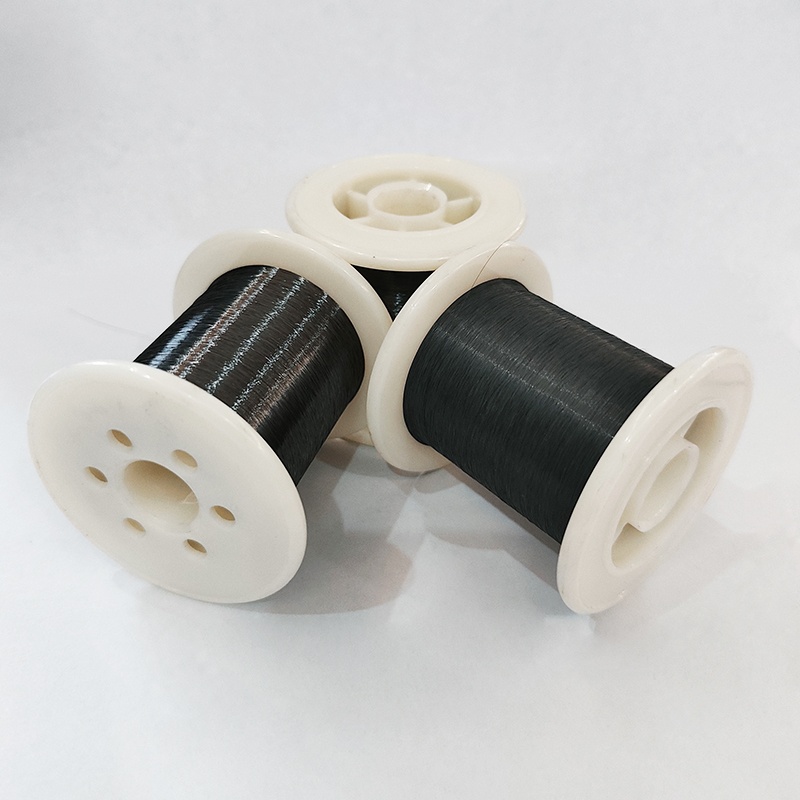
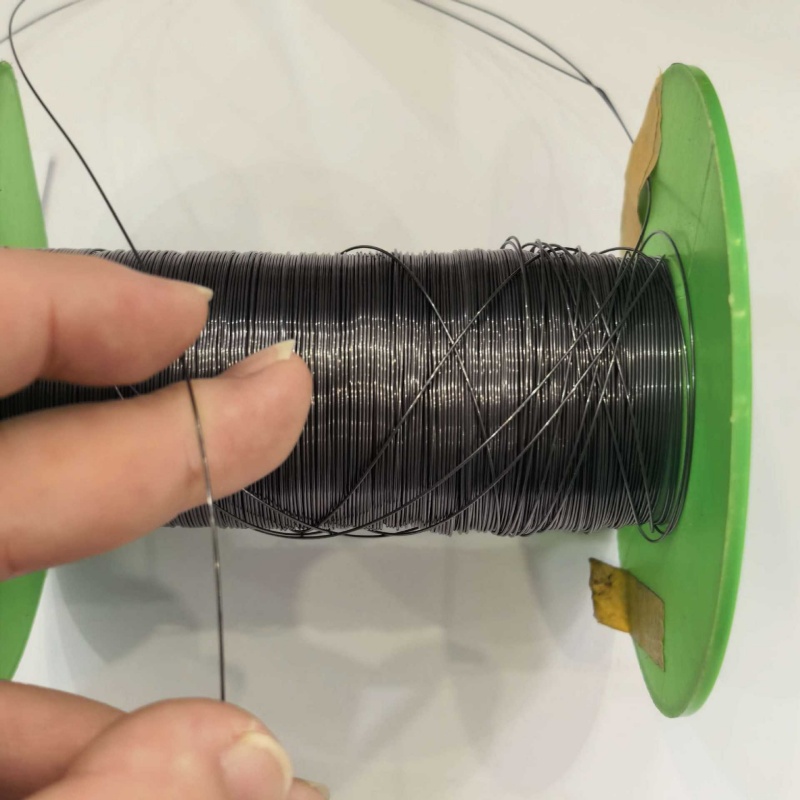
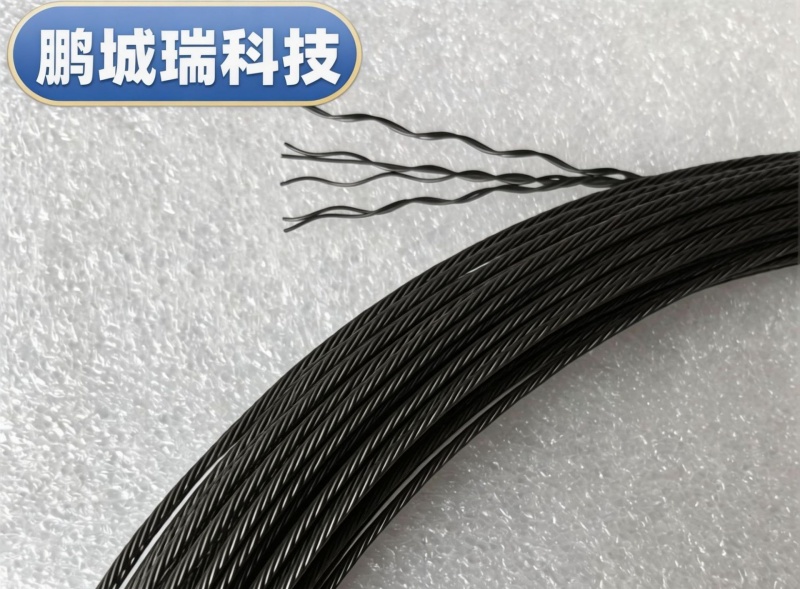
Nickel-titanium shape memory alloy wire
2. Improve the heat treatment process and optimize the microstructure
Precise regulation of aging treatment: For nickel-titanium alloys produced by additive manufacturing, aging treatment at 400-600℃ yields significant results. At 500℃ and 600℃, aging can reduce high-angle grain boundaries and promote the uniform precipitation of the Ni₄Ti₃ phase, enhancing the matrix strength and phase transformation stability. Specifically, after aging at 500℃, the shape recovery rate of the alloy under a deformation of 6% can reach approximately 95%. For coarse-grained nickel-titanium alloys, after aging at 200℃ for 1 hour, the shape recovery rate can be increased from 90% to 93%. Furthermore, aging at 250℃ for 2 hours can significantly reduce the residual strain after cyclic loading.
Coupling of thermal cycling and low-temperature aging: Combining thermal cycling with low-temperature aging allows for beneficial interactions between dislocations and precipitates in the alloy, resulting in a more stable dislocation structure and reducing irreversible damage caused by dislocation movement during cycling. The degree of memory performance degradation in alloys treated with this coupling after multiple cycles is significantly lower than that in untreated samples.
Cold rolling and annealing combined treatment: Through the process of combining cold rolling with annealing, grain refinement can be achieved. Coupled with solution treatment, it can make the distribution of alloy elements more uniform, reduce the interference of composition segregation on phase transformation, and further enhance the stability of the memory effect.
3. Adjust the preparation process to reduce structural defects
Optimizing additive manufacturing parameters: By adopting the layer-by-layer alternating powder bed fusion-laser beam method and adjusting the scanning spacing, Ti₄Ni₂Oₓ can be controlled to form a combination of spherical and sub-ellipsoidal shapes. This morphology can reduce irreversible strain and enhance the shape memory effect to 98.8%. When using laser directed energy deposition technology, the laser power and scanning speed should be reasonably set to avoid the formation of abnormal microstructures due to complex thermal history. Additionally, following the dual criteria of laser powder bed fusion, the linear energy density is used to control the part density, and the normalized energy input rate is used to regulate the microstructure, enabling precise control of the phase transition temperature.
4. Ensure proper surface protection to delay environmental degradation
Corrosive environments can damage the grain boundary structure of nickel-titanium alloys, thereby affecting the reversibility of phase transformation. For devices such as nickel-titanium stents implanted in the human body, hydroxyapatite coatings can be applied to the surface to isolate them from the corrosive effects of body fluids. For nickel-titanium components used in industrial settings, passivation treatment can be applied to form a dense oxide film, or coating technology can be used to resist the erosion of humid, salt-containing, and other corrosive media, thus maintaining the long-term stability of the memory effect.
5. Strengthen post-formation training to stabilize phase transition characteristics
Training nickel-titanium alloys under specific stress conditions can enable the matrix to form a dislocation configuration of a specific stress field, which can induce the nucleation of martensite variants with preferred orientation. The trained alloy not only exhibits improved one-way and two-way memory properties, but also significantly enhances the stability of functional dimensions, maintaining stable recovery accuracy during multiple shape memory cycles.
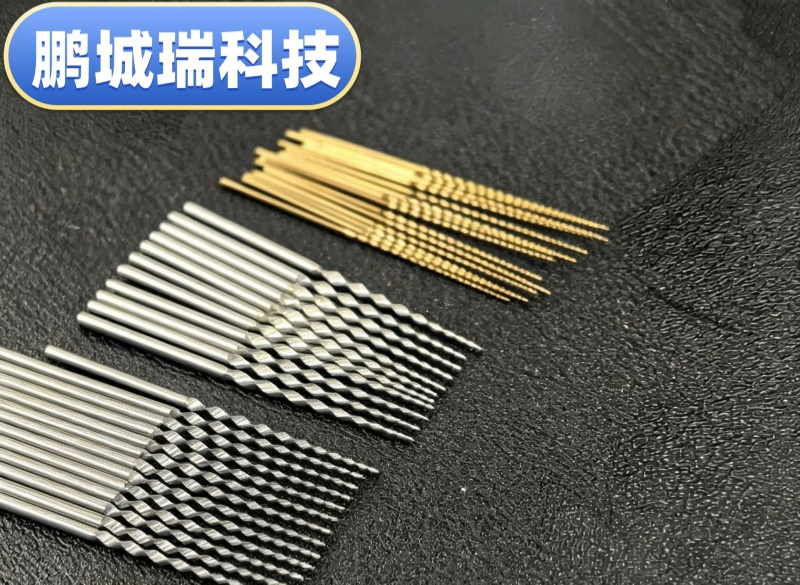
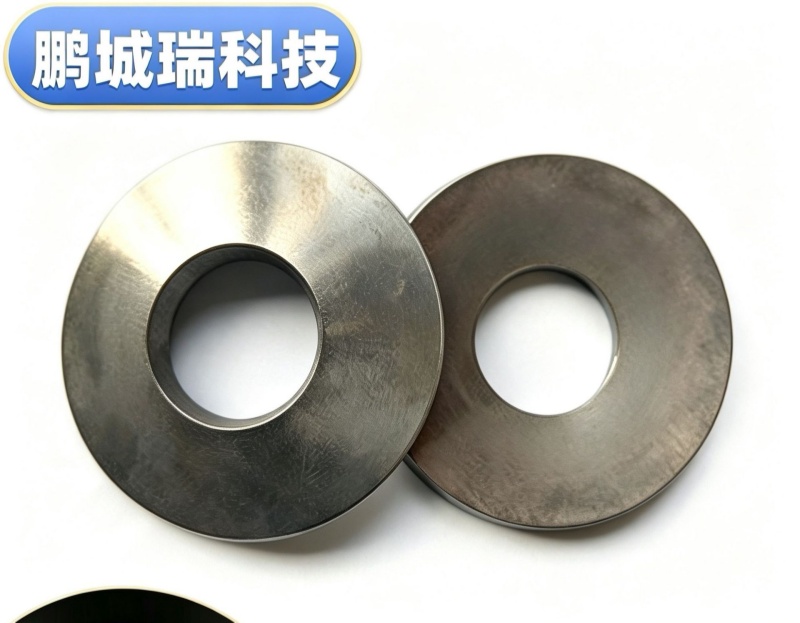
Nitinol
Seamless nickel titanium tube Nickel titanium fiber wire Nickel titanium plateApplication Area
Medical Industry New Energy Aerospace Machinery Manufacturing Marine Engineering Petrochemical IndustryContact Us
Contacts:Manager Wu +86 13632667260


 WeChat
 Call me
X