
 Chinese
 English
Service Hotline
+86 18948275773+86 13632667260



The shape memory effect of nickel-titanium alloys is fundamentally due to the reversible thermoelastic martensitic transformation within the material. This means that as temperature changes, the alloy can orderly switch between austenite and martensite crystal structures. The reversible adjustment of atomic arrangements ultimately leads to the macroscopic phenomenon of shape memory. This can be specifically broken down into two aspects: structural basis and transformation process
1. Two reversible crystal structures are the foundation
Nickel-titanium alloys can stably exhibit two distinctly different crystal structures at various temperatures, which serves as the material basis for the memory effect.
High-temperature phase (Austenite): When the temperature exceeds the austenite transformation temperature (As point) of the alloy, the nickel-titanium alloy exists in the austenite phase. At this stage, the atoms adopt a body-centered cubic structure with highly ordered arrangement, resulting in high strength and excellent elasticity. The shape under this condition is "remembered" by the alloy as the initial preset shape.
Low-temperature phase (martensite): When the temperature falls below the martensitic transformation temperature (Ms point), the alloy transforms into the martensitic phase. Its atomic arrangement adopts a monoclinic structure, which is relatively disordered. This results in reduced alloy strength but significantly enhanced plasticity, enabling easy bending, stretching, and other deformations under external forces. The alloy can maintain its deformed shape stably.
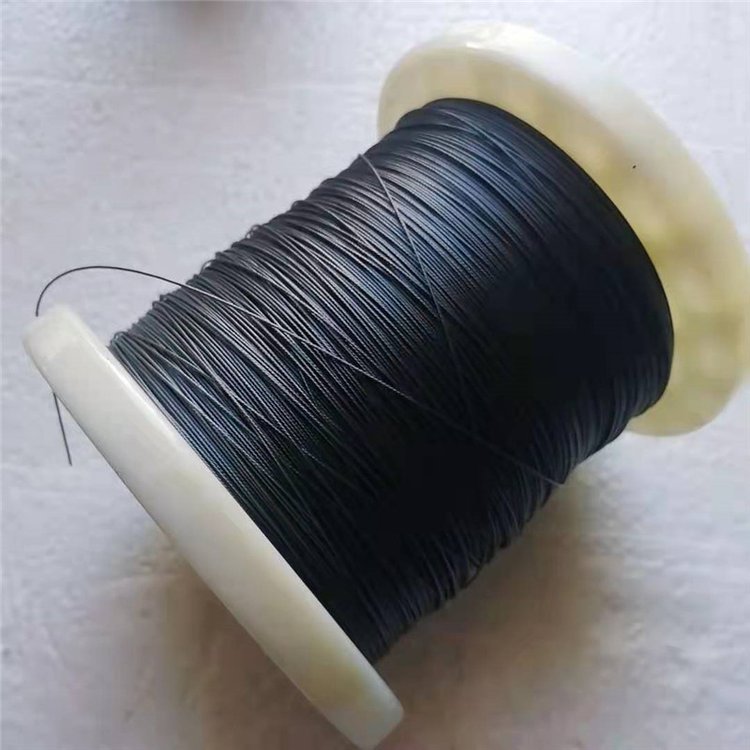
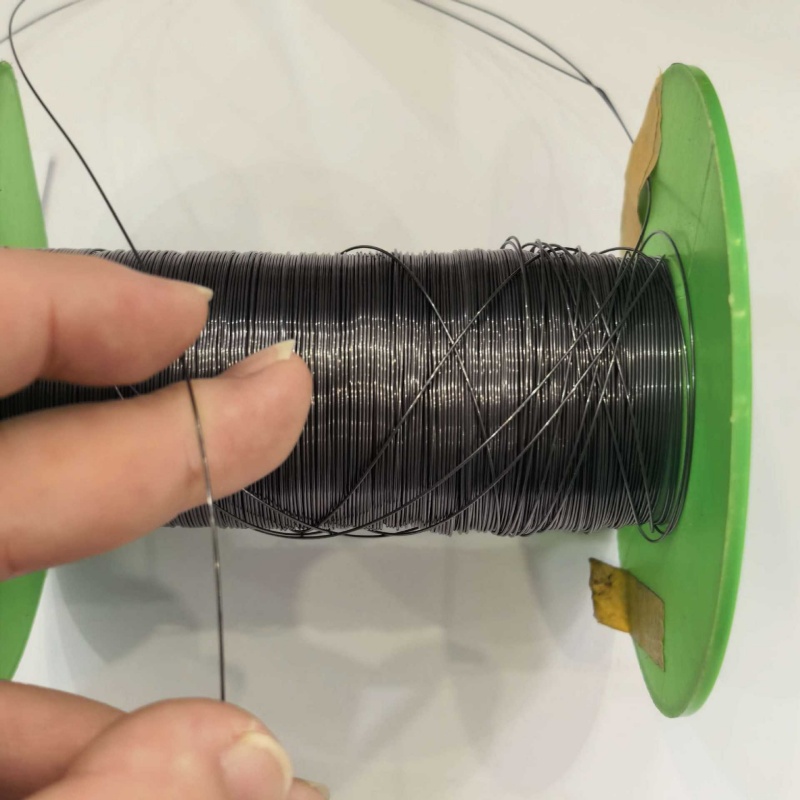
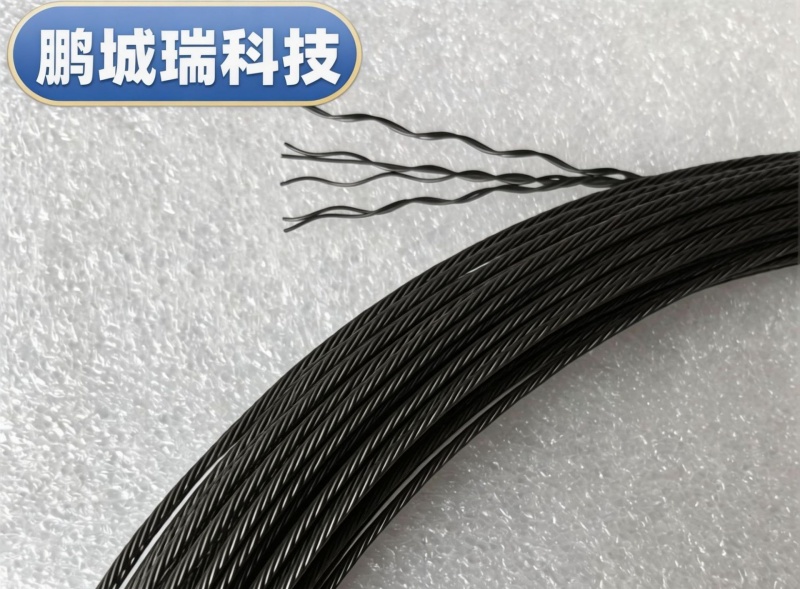
Nickel-titanium alloy wire
2. The reversible process of "deformation - phase transition - recovery" is the core
The manifestation of the memory effect involves the controlled switching of an alloy between two phases through artificial temperature and external force manipulation, which can be broken down into three key steps:
1. High-temperature pre-setting of the initial shape: First, heat the nickel-titanium alloy to a temperature significantly above the As point, ensuring it is entirely in the austenite phase. Then, shape it into the desired initial form using a mold and maintain the temperature. This step effectively "locks" the alloy's crystal structure into the initial morphology.
2. Fixing Temporary Deformation at Low Temperatures: Cool the pre-shaped alloy below the Ms point to fully transform it into the martensitic phase. At this stage, only a small external force is needed to induce significant deformation. By maintaining the external force during further cooling, the martensite will reorganize and "lock" in its deformed position. Once the external force is removed, the deformation remains permanent.
3. High-temperature-induced shape recovery: Upon heating the deformed alloy, when the temperature exceeds the As point, the martensitic phase begins to transform back into the austenitic phase. Atoms undergo shear movement in the reverse direction of the phase transformation, reverting to the pre-established ordered arrangement at high temperatures. Once the temperature surpasses the austenite finish temperature (Af point), the phase transformation is fully completed, and the alloy completely restores its original pre-established shape.
Moreover, the nickel-titanium composition ratio and trace element additions in nickel-titanium alloys can regulate the phase transformation temperature, enabling adaptation to various application scenarios. For instance, medical nickel-titanium devices adjust the phase transformation temperature to the range suitable for human body temperature. The superelasticity exhibited at room temperature is also the result of stress-induced martensitic transformation and reverse transformation, which can be regarded as a room-temperature version of the "memory effect.".
Wu Ge Niobium-Titanium Alloy Materials, the company specializes in nickel-titanium fiber wires and seamless nickel-titanium memory tubes, serving as a supplier of nickel-titanium alloy materials, wires, and tubes. We welcome everyone to communicate and collaborate, seeking like-minded partners.
Nitinol
Seamless nickel titanium tube Nickel titanium fiber wire Nickel titanium plateApplication Area
Medical Industry New Energy Aerospace Machinery Manufacturing Marine Engineering Petrochemical IndustryContact Us
Contacts:Manager Wu +86 13632667260


 WeChat
 Call me
X